With my family living in North Carolina, I was able to visit them for the first week of August. We decided to do a fun excursion to Charleston on Friday/Saturday. We ended up staying in Mount Pleasant and started the first day off at Patriots Point. Patriots Point has the USS Yorktown and the Fort Sumter Ferry. We got a ferry for the late afternoon, so we spent the early afternoon on the naval ship. Once it was time for the ferry, heavy rain came through 15 minutes before boarding. Luckily, it left the area after the ferry stopped by the harbor in Charleston. We ended the day with a delicious crab feast at Shem’s Creek Crab House. Mouthwatering heaven!
The next day, we decided to give Sullivan’s Island a try and found a great parking spot not far from the beach. The beach runs along the coast and there is a beach near Fort Moultrie as well. After the beach, my mom, sister, and I had a late lunch at Poe’s Tavern. We ended the day with a quick visit to Fort Moultrie. When I say, quick – I mean quick! We got there 20 minutes before it closed. It worked out though as the NPS Ranger who was closing the national monument asked me if I wanted to help him bring down the flag. Not only did I get an opportunity to help bring down the flag, but I got to help fold it to be stored for the night. Are you looking for some ideas for a quick Charleston weekend getaway? Read this article to see some options, especially for those who like the military side of American history.
USS Yorktown
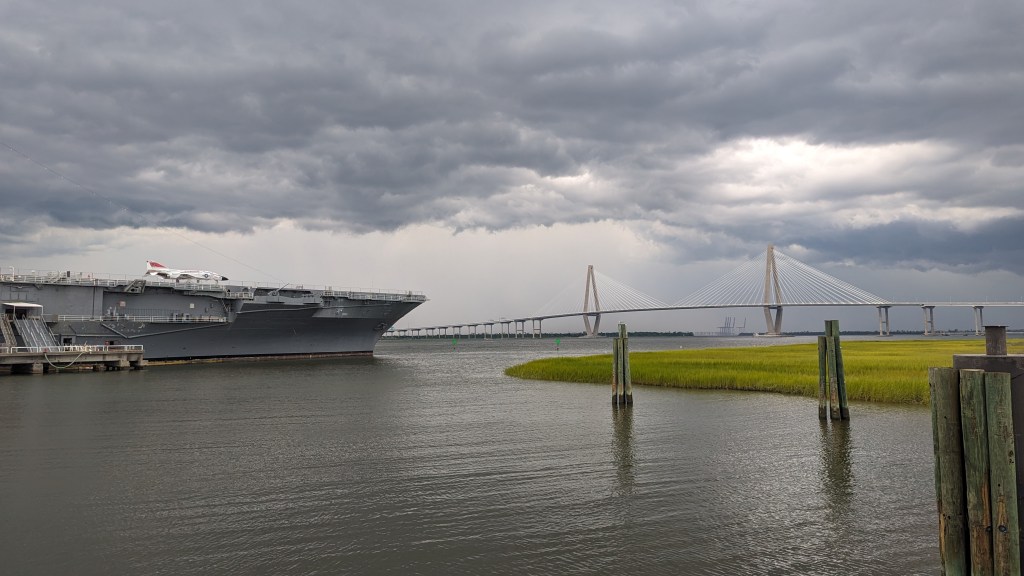
The USS Yorktown (CV-10) is in Patriots Point in Mount Pleasant, SC (north across the Arthur Ravenel Jr. Bridge). This naval ship is the 10th aircraft carrier to serve the US Navy. While construction was originally started by men, due to WWII, it was completed by women in a record 16 ½ months! Known as the famous “Fighting Lady,” she was commissioned on April 15th, 1943. She participated heavily in WWII in the Pacific offensive that started in 1943 and ended in 1945 with the defeat of Japan. Her accolades include a Presidential Unit Citation and 11 battle stars – battle stars are issued to warships for meritorious participation in battle or for having suffered damage during battle conditions.
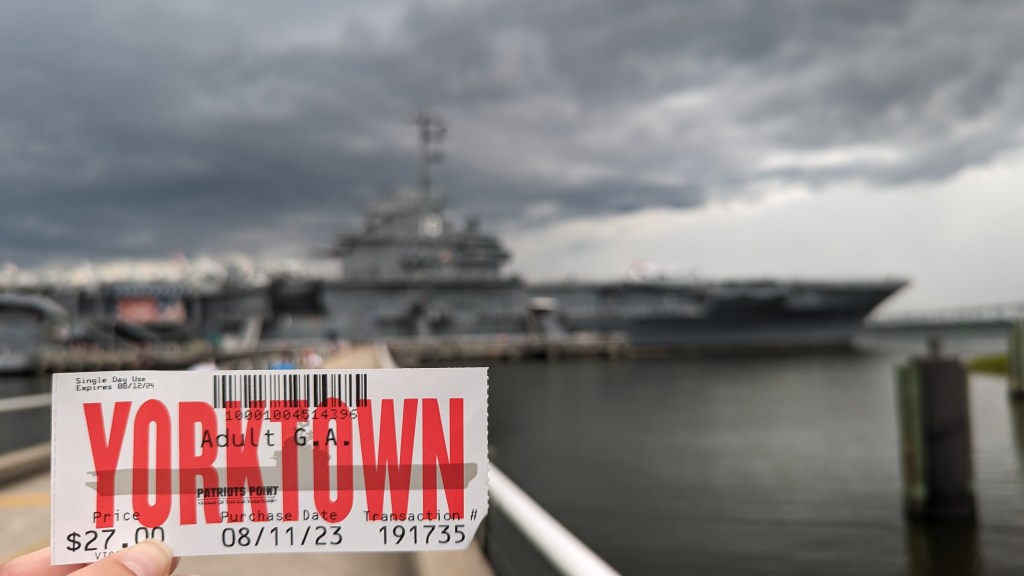

The most famous battle in the USS Yorktown’s history is her help in the battle over Midway. The Fighting Lady had been hit in Corral Sea Battle near Australia. After docking back in Pearl Harbor, she had to have a quick patch-up as her deck had a huge hole in it. What was originally going to be a 2-week patch-up, turned into a 48-hour all-hands-on-deck as a siege on Midway was in the works. While the USS Yorktown got damaged again during the battle of Midway, her surviving pilots gave one last push to destroy the last aircraft carrier.

Her service did not stop there. Nearly 10 years later, the Fighting Lady was modernized with a canted deck that allowed the use of jet aircraft to be used most efficiently. This gave half the flight deck back to the ship for carrying capacity. If a plane had to abort a landing, it had open air and room to speed up and take off again. This angular runway is so useful that it is used by aircraft carriers today!
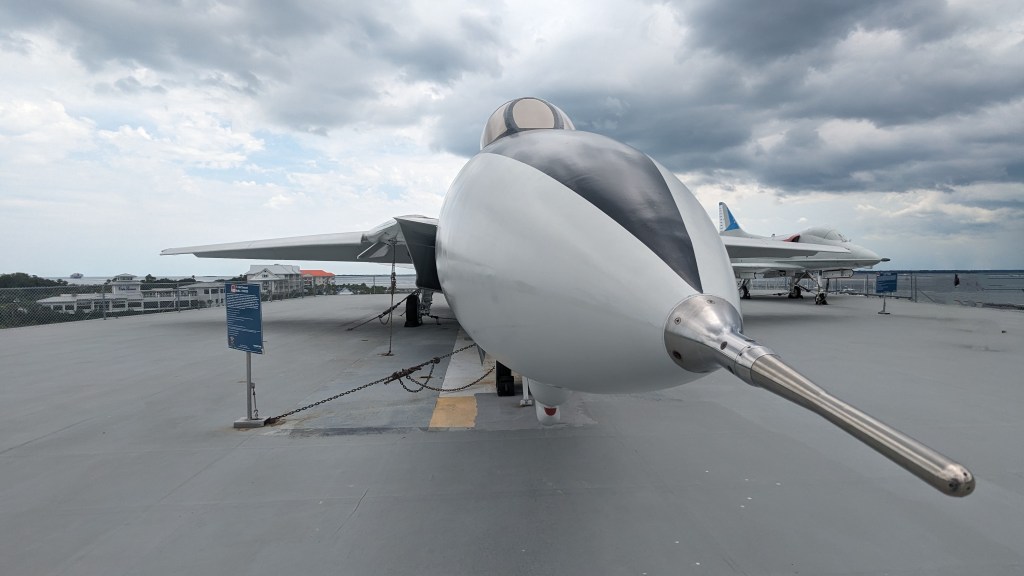
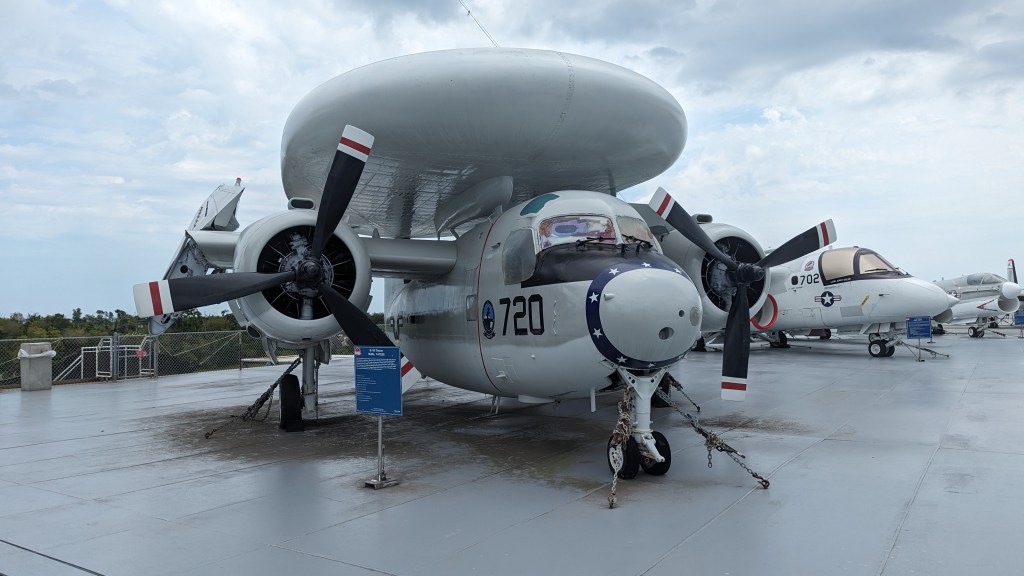
One fun and cool fact about the USS Yorktown is that it was the ship to retrieve Apollo 8. Apollo 8 is not known for the first steps on the moon or the infamous “Houston, we have a problem.” Apollo 8 was the first crewed spacecraft to leave the low orbit of Earth. The spacecraft even made it to the moon; however, it just orbited the moon. Crew members included Frank F. Borman II, William A. Anders, and James A. Lovell Jr. Lovell would go on to crew the infamous Apollo 13.

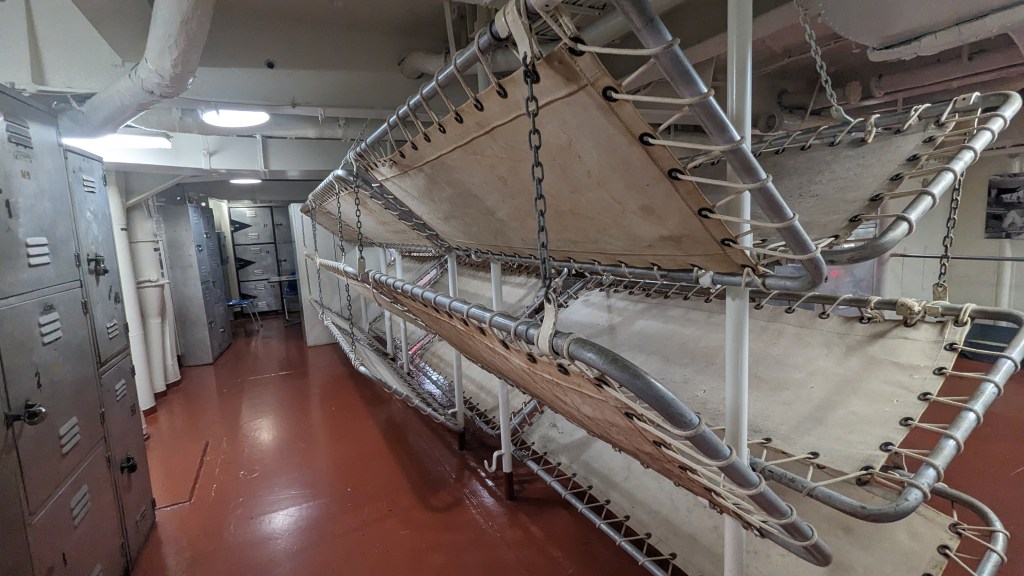
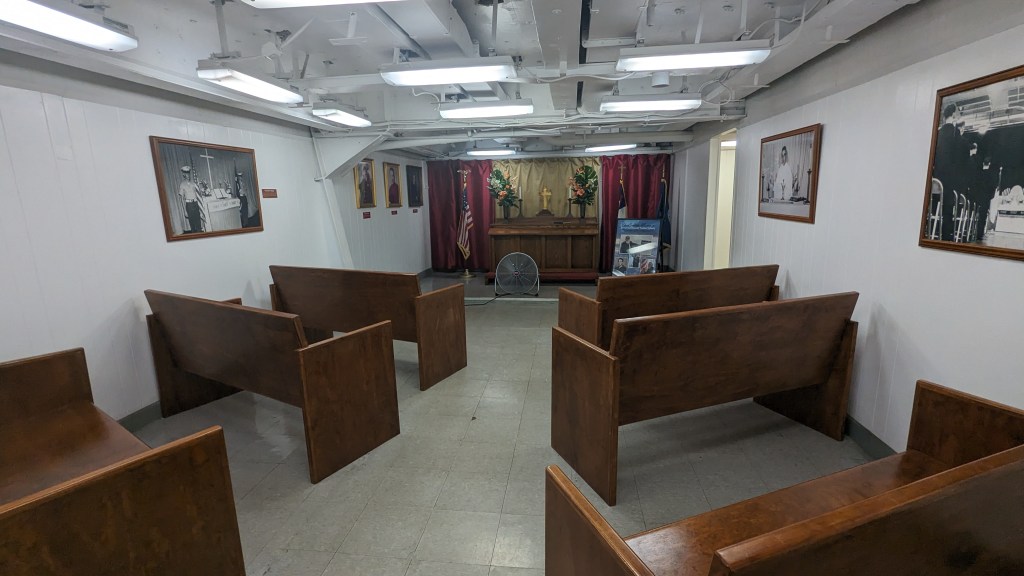
There are four self-guided tours you can take. Tour 1 is the main tour and will take you throughout the missile assembly workshop, cafeteria, mess hall, engine room, bunks, and medical rooms including hospital beds, dentistry, surgery rooms, and more!
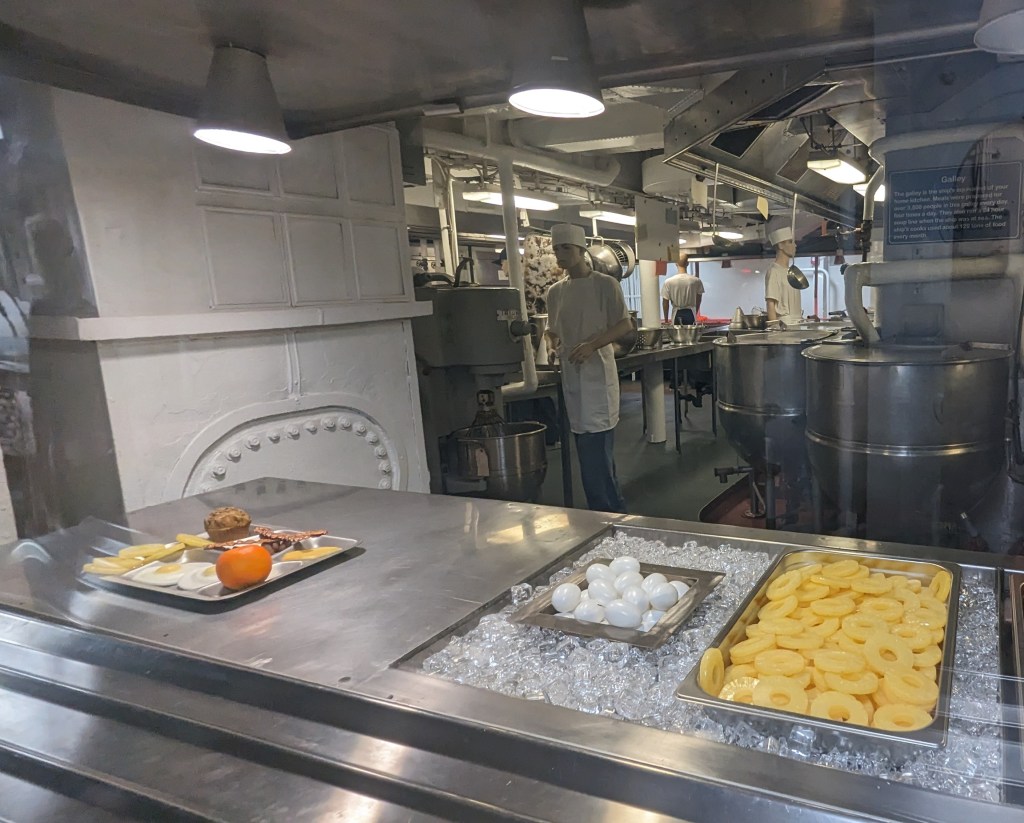
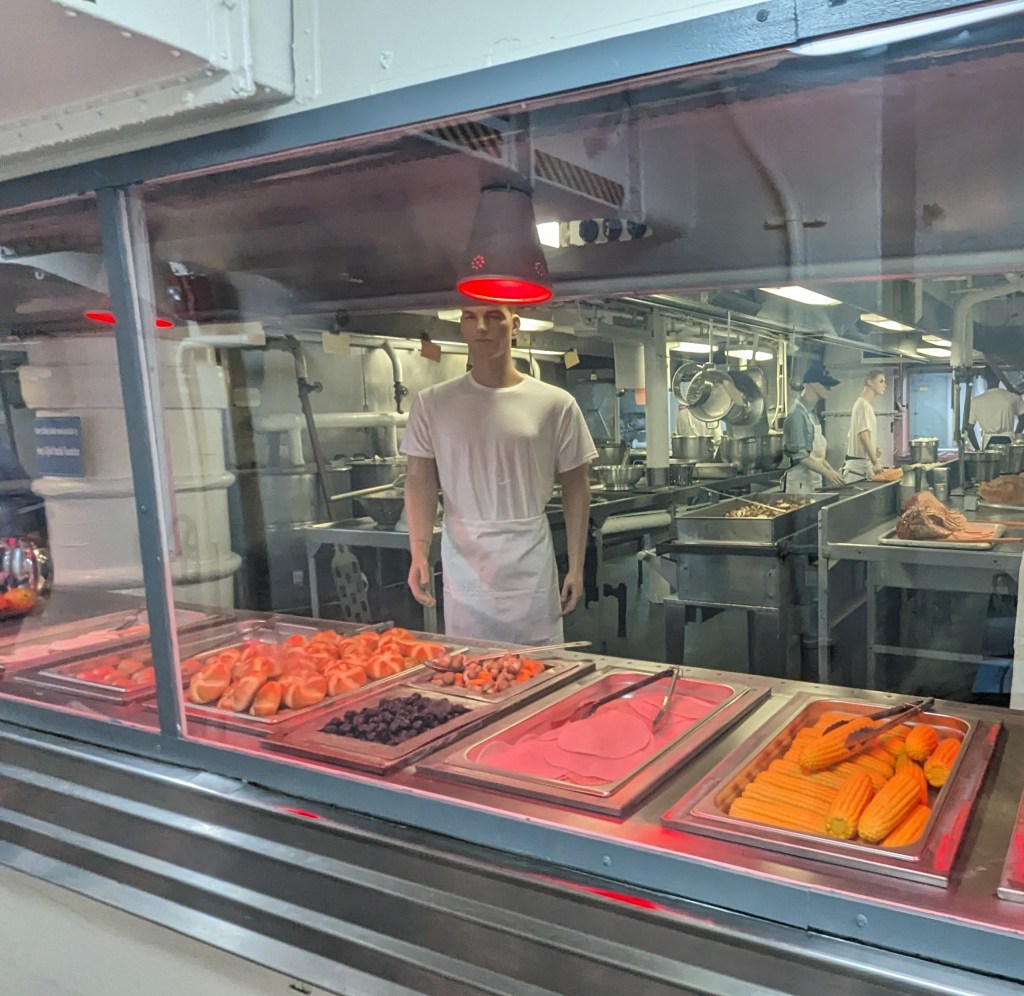
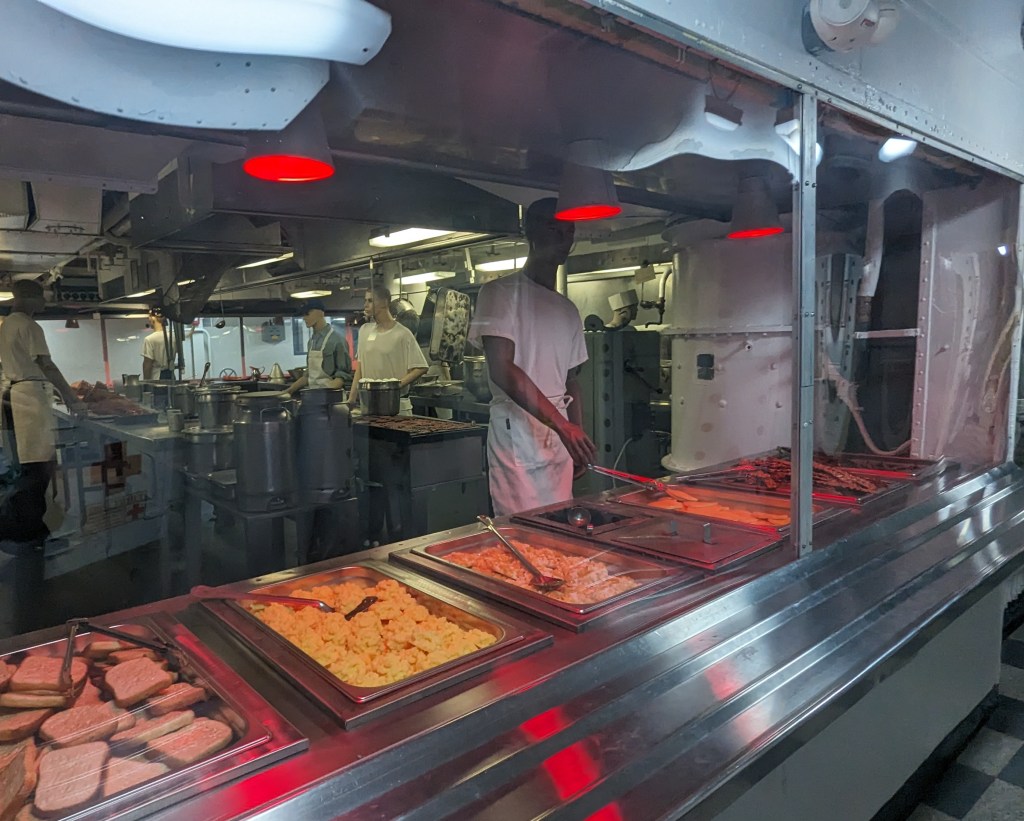
The cafeteria was able to serve thousands at a time.
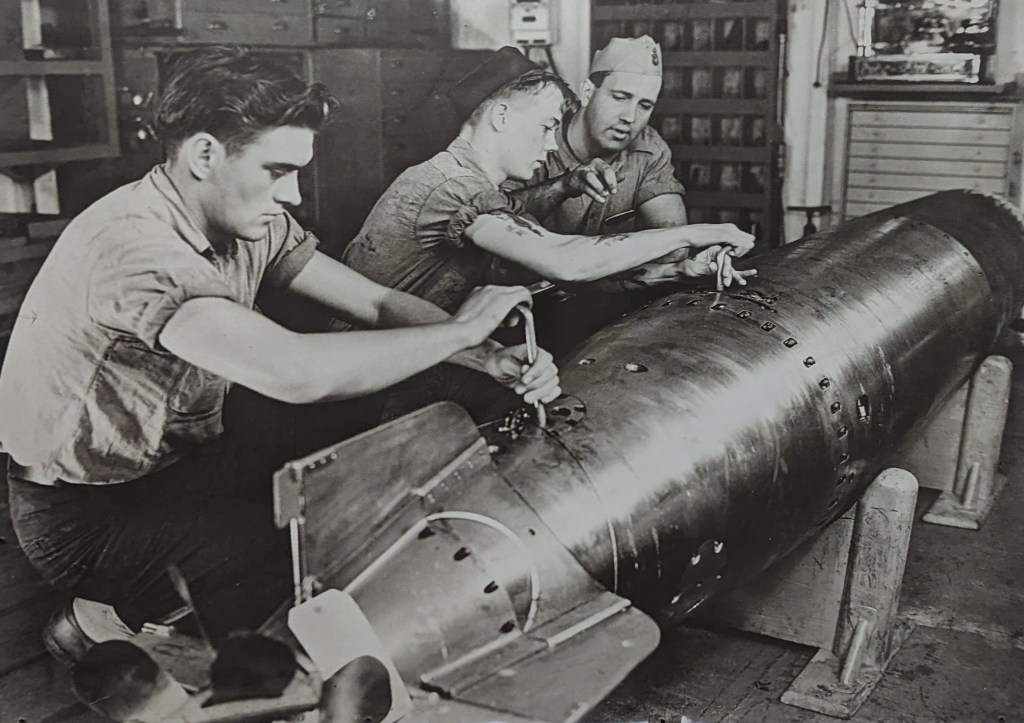
The other popular tour takes you to the main flight deck used for aircraft take-off and landing. The self-guided tour will take you through the mission briefing room. This is where pilots were walked through the jobs each unit would be in charge of. Typically there was a torpedo unit and a dive bomb unit. The torpedo would be dropped very close to the water with the intention that it would hit the bottom of the enemy’s ship. However, America was notorious for having awful torpedoes. Many pilots joked that they were just flying over to look at the enemy ship rather than destroy the ship. They weren’t confident that the Mark 14 torpedo would even go off or get to the target. These weapons would often go off the straight path, usually under the ship, even when perfectly or near perfectly placed by the pilot. Inside the torpedo, the magnetic exploder often caused premature detonation and the contact exploder often failed to detonate.

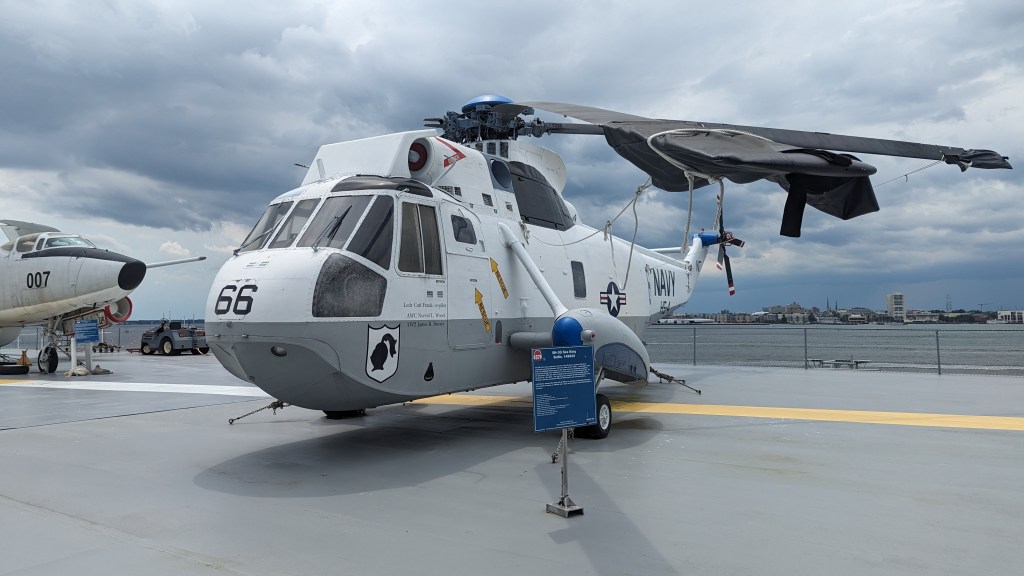
You’ll also see many decommissioned aircrafts up close and even get to see inside propulsion chambers – though for safety – the propulsion fans are not located on the aircraft. Take a moment and envision hundreds of planes cornered to one side of the ship whilst hundreds of men are scrambling around the flight deck getting into their assigned positions. Pilots getting into their planes. Aircraft marshalls guide planes to the runway. Zoom! Planes flying off to flight in battle. Yet, here she sits today relaxing in this little harbor.
Fort Sumter
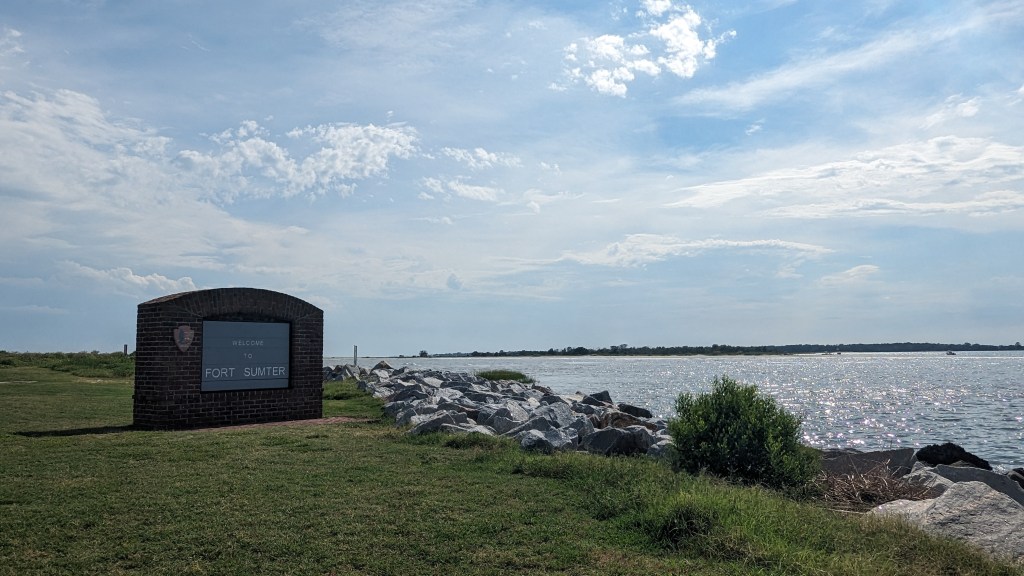
Fort Sumter is located on a manmade island between Fort Moultrie (Sullivan’s Island) and Fort Johnson (Stiles Point). You must take a ferry to get to the fort. I like the ability to do both the USS Yorktown and Fort Sumter from Patriots Point. The downside is that the ferry is not operated by the NPS so any interagency passes you have will not be redeemed here. It is a partner with the NPS, so it is an official way to visit the fort and there is an NPS volunteer on board to tell you historical facts about Fort Sumter and the Charleston area.

Fort Sumter was created when the government decided to re-evaluate its coastal defense in 1829 after realizing weaknesses from the War of 1812. While others, like Fort Moultrie, had been around, they did not provide much advantage against coastal attacks. Of course, the government would never have imagined that Fort Sumter would be used against them nearly 30 years later! This fort is famous for being the spot where the Civil War started.
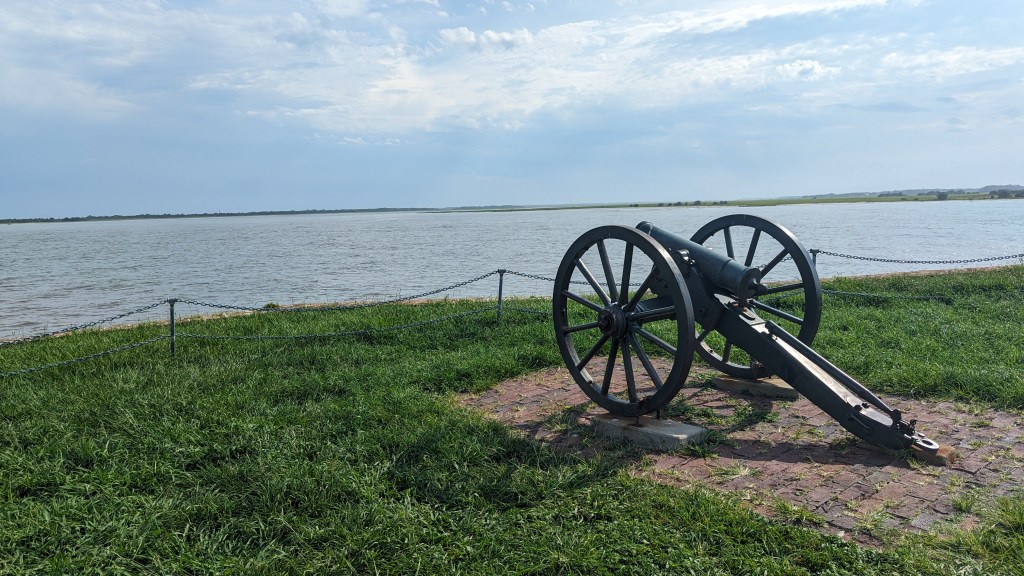
Major Robert Anderson and his men were stationed at Fort Moultrie when they realized the final hostility of the now-seceded South Carolina and local Charleston Confederates. Realizing the poor situation, he moved his men and their supplies to Fort Sumter. Fort Moultrie was then taken by the local militia. Anderson and his men stayed at Fort Sumter for several months but once a replenishment was needed, it was quickly halted due to the Confederate coastal forts.
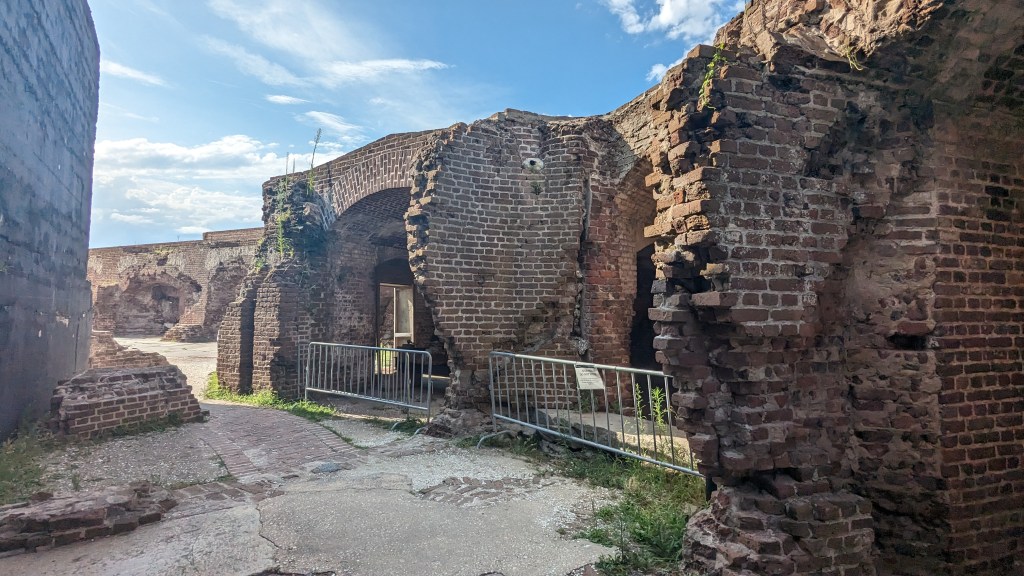
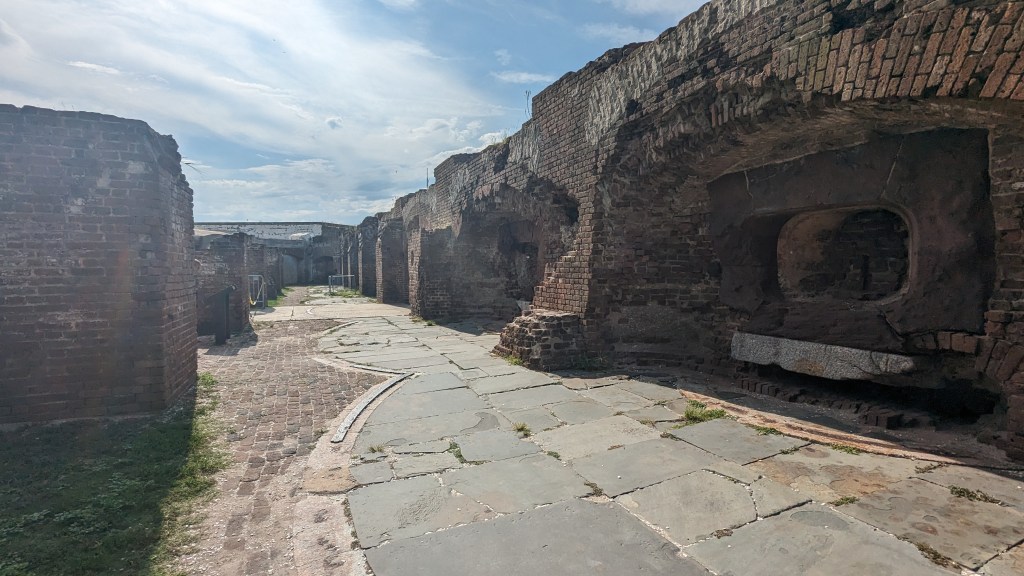
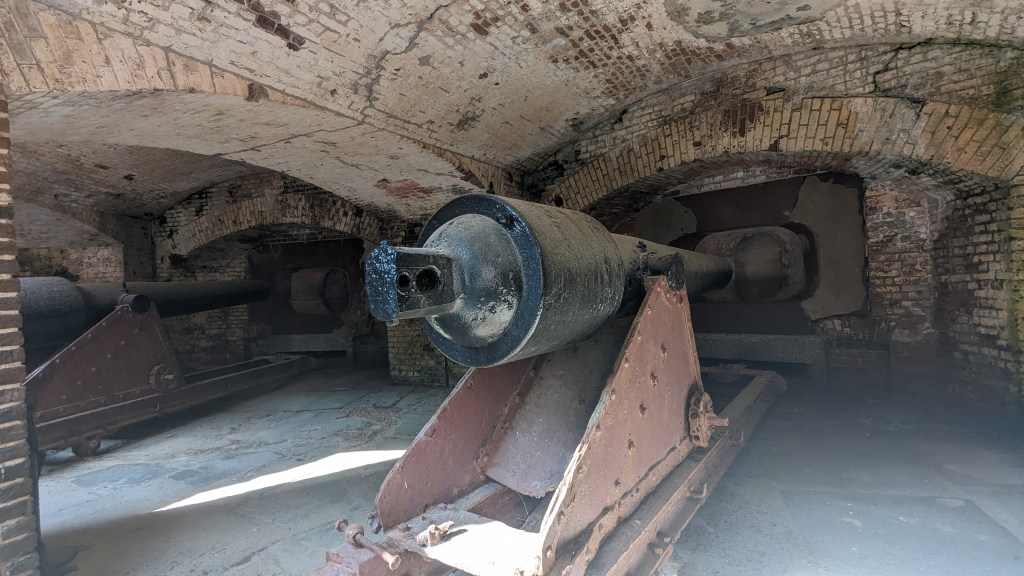
On the morning of April 12, 1861, the South Carolina Militia fired shots that ran throughout. This signaled to the surrounding forts – Moultrie, Johnson, and the Battery – to start firing at Fort Sumter. Both sides agree this is when the Civil War started. The Union soldiers held off the bombardment for a whopping 34 hours! Unfortunately, with little supplies left, if not used up yet, Robertson surrendered on gentlemen’s war terms. What’s even sadder is that there were no casualties during the 34 hours, but when the US flag was being brought down in a ceremony of surrender, a premature cannon fire occurred and killed two soldiers. Once the Union artillery left, Fort Sumter was taken by the Confederacy.
Shem Creek Crab House
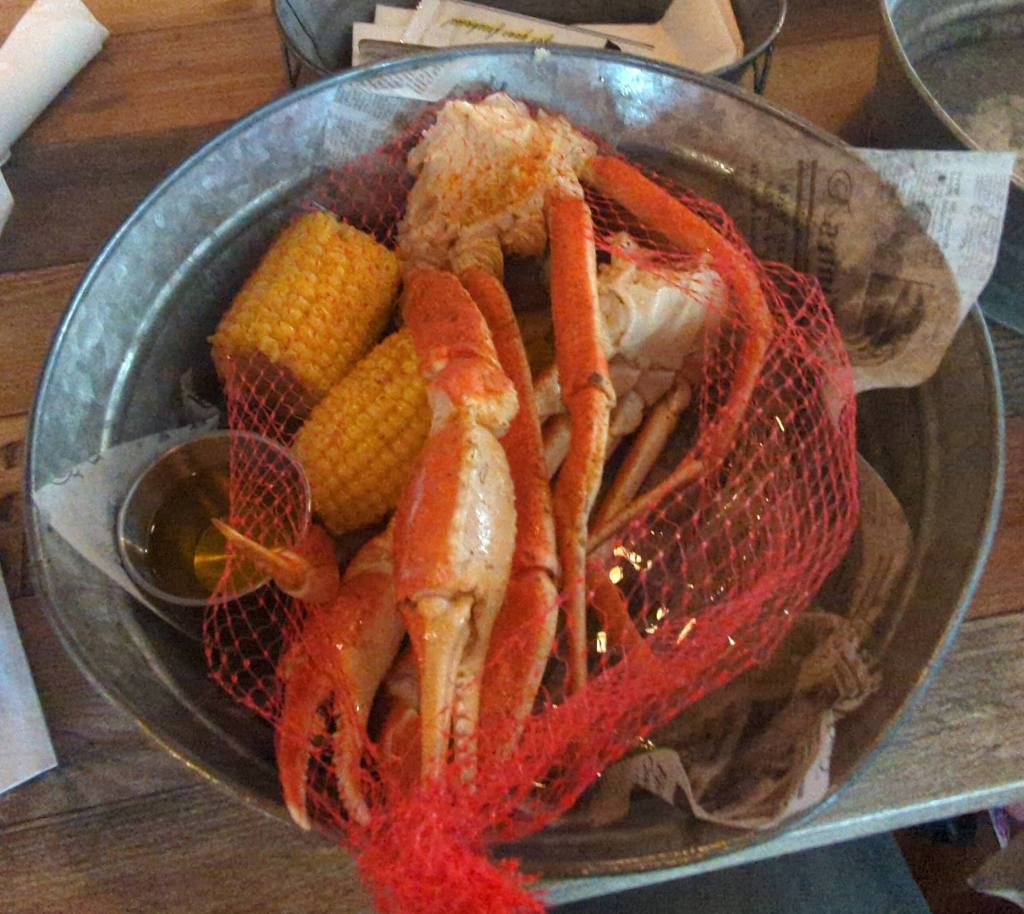
When in Rome… or when on the coast? Come on?! Who goes to the coastal beach and doesn’t get seafood at the bare minimum? I’m a crab lover and I can’t pass up delicious crab when it presents itself! As I said, Shem Creek Crab House has your fix for delicious traditional seafood dishes. The menu includes hush puppies, fresh catches, scallops, shrimp, salmon, oysters, and for the oddball, chicken tenders, sandwiches, and burgers. However, what must be tried is their famous crab steam pots! Choose from a shrimp boil, Dungeness, Alaskan Snow, or a little bit of everything (the Crab House). My personal favorite is the Alaskan Snow Crab that comes with sliced Andouille sausage, corn on the cob, chopped potatoes drenched in garlic butter, and topped with Old Bay seasoning. Are you in your happy place yet? If not, just look at the video below. Can you smell the hot crab legs with the subtle undertone of butter yet? Shem Creek Crab House will not disappoint!
Toast! All Day
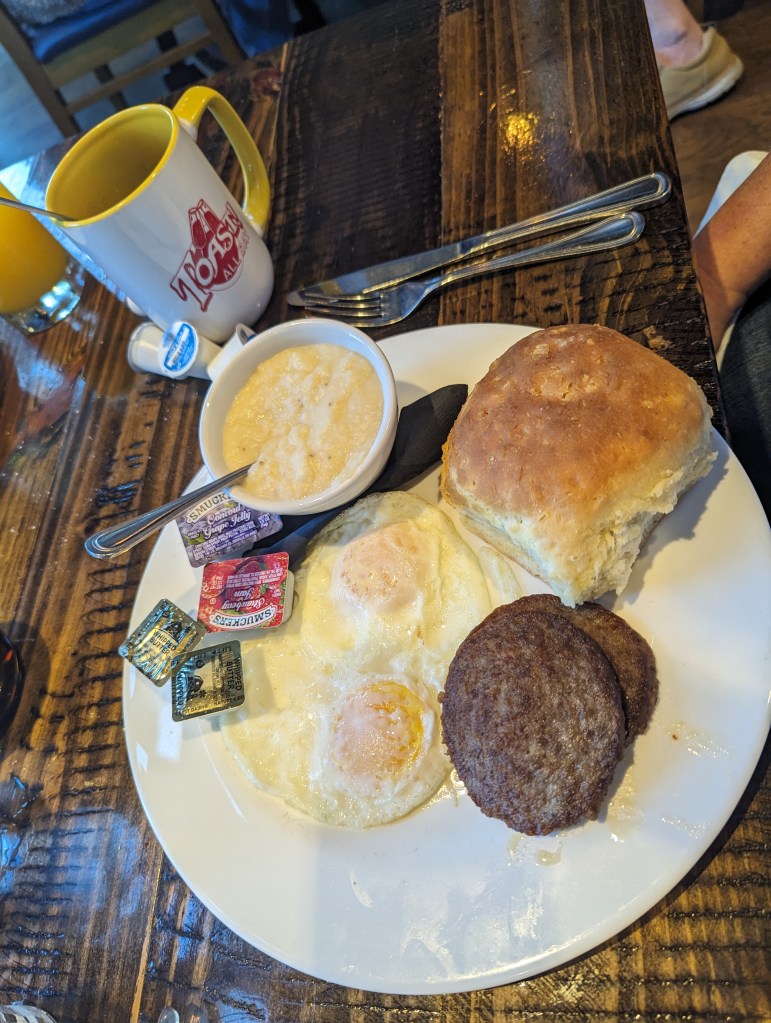
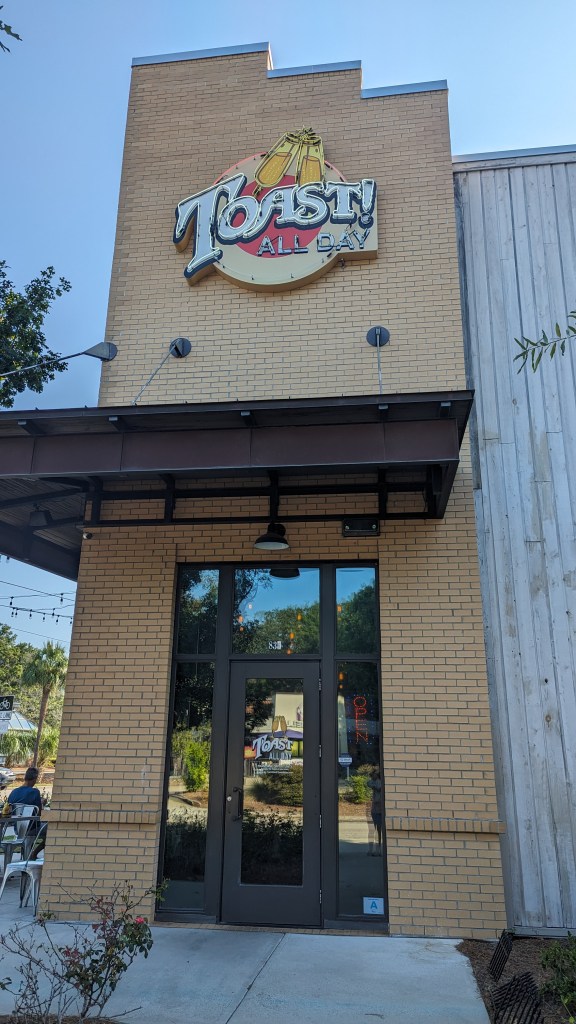
We started off the day by getting breakfast at Toast! All Day. This fun breakfast/brunch spot has a few other locations in the Charleston area. It has been voted #1 breakfast by The New York Times and a Traveler’s Choice Best of the Best award. Start off with a fun mimosa, hand-crafted coffee, or a good old-fashioned cup of Joe.
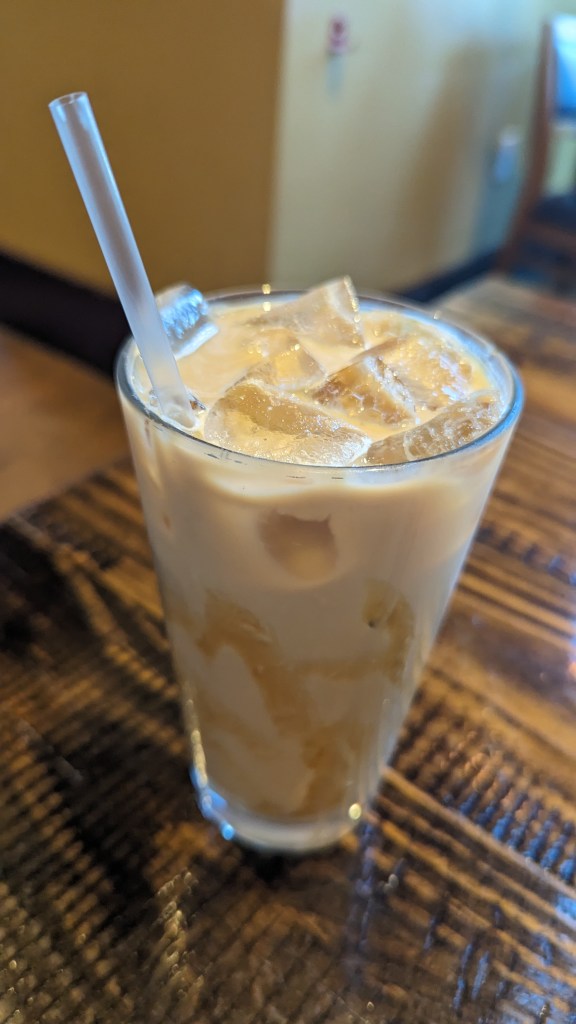
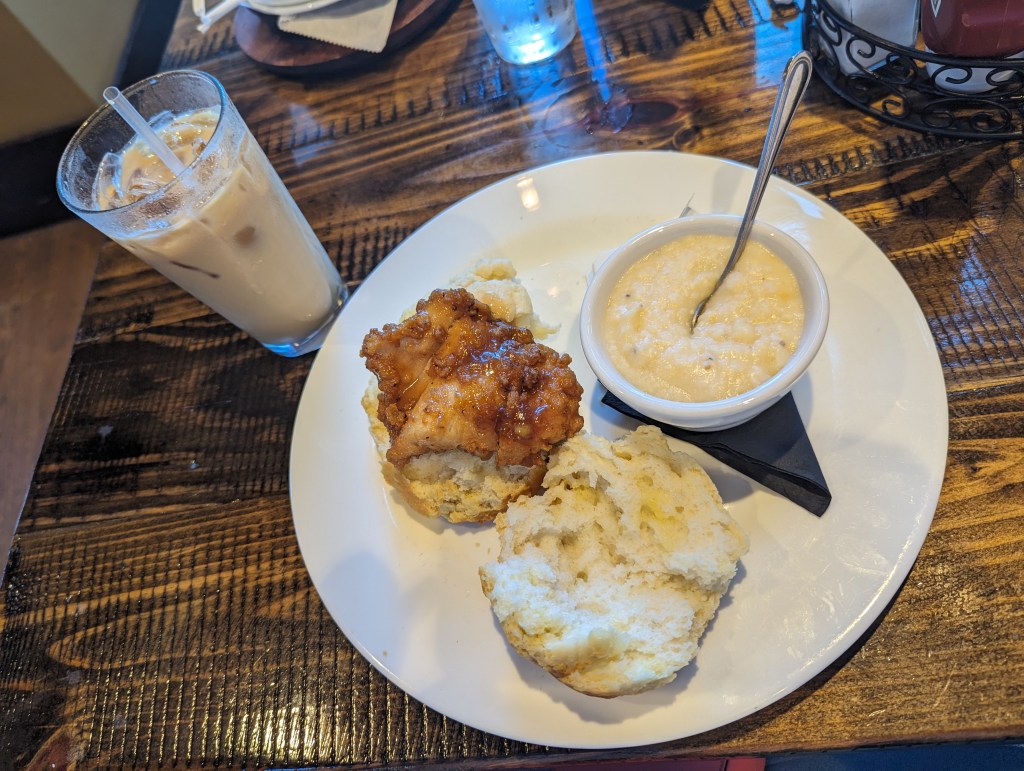
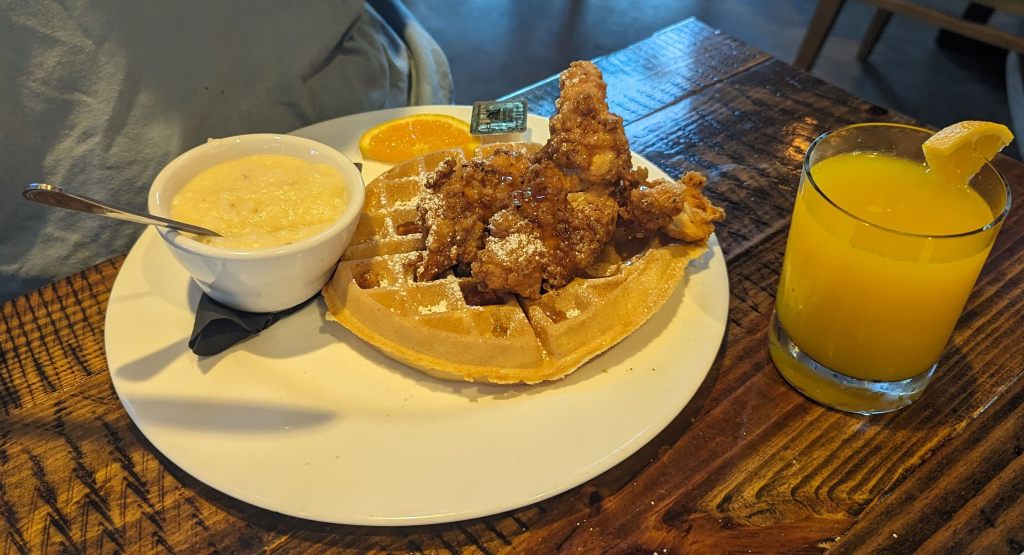
Sullivan’s Island Beach
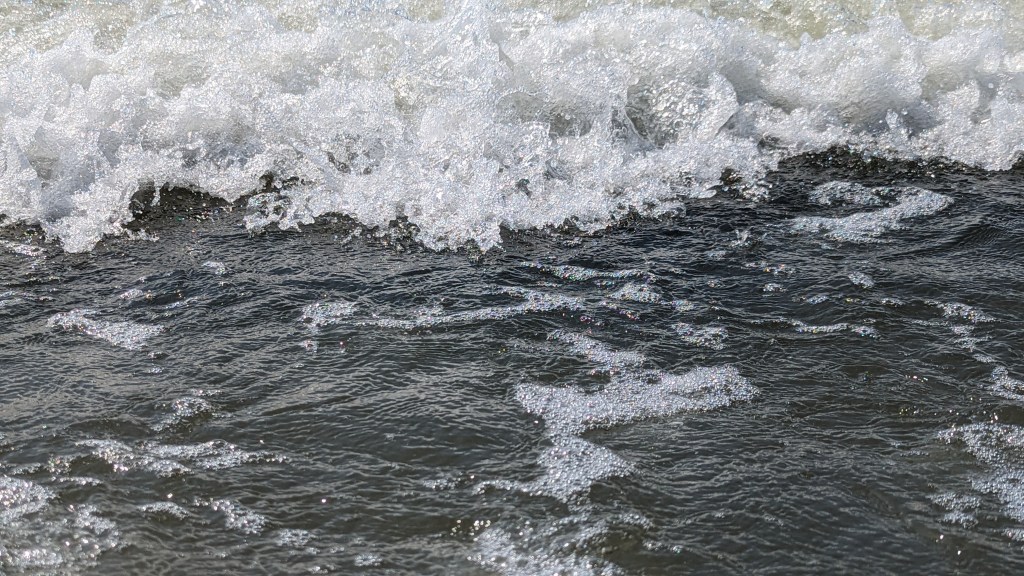
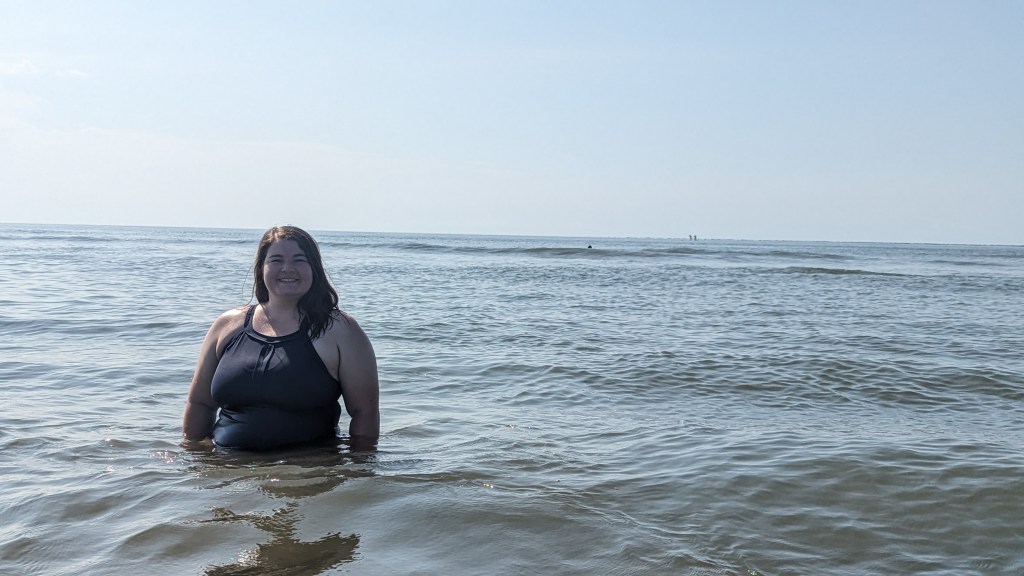
Since our hotel was closer to Mt. Pleasant, we decided to venture out to Sullivan’s Island. This fun island is located north of Charleston and has a huge beachfront. My mom, sister, and I visited on a Saturday, and we were still able to find parking around 10AM. The beach itself was also breathable and the crowds didn’t show up until after lunch.
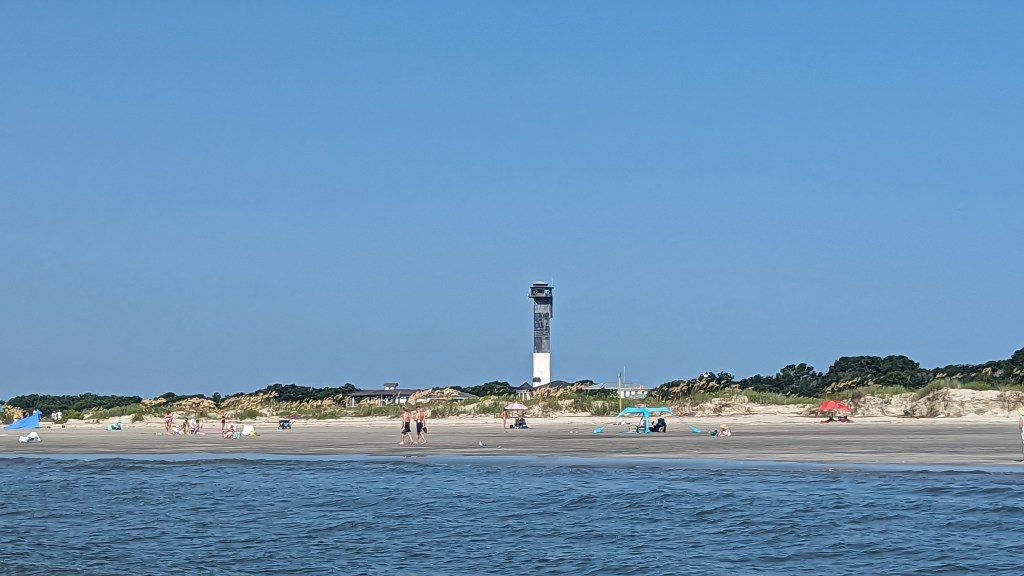

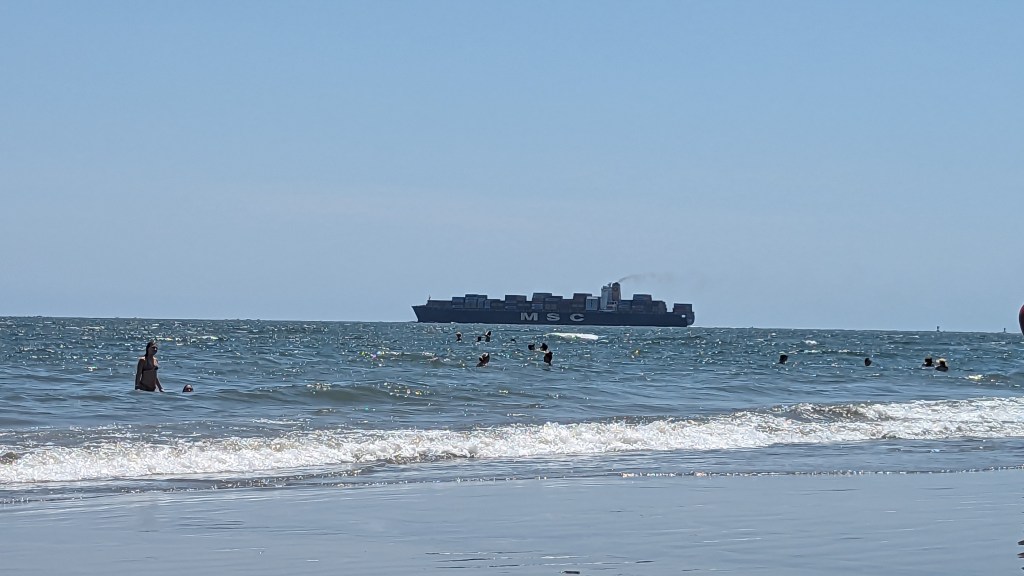
One fun thing about this beach location is that you can see all the cargo ships or cruise ships going in and out of the harbor. I was there for roughly 4 hours and saw 4-5 ships. It was fun to see them start out as a spec in the distance and get bigger as they got closer.

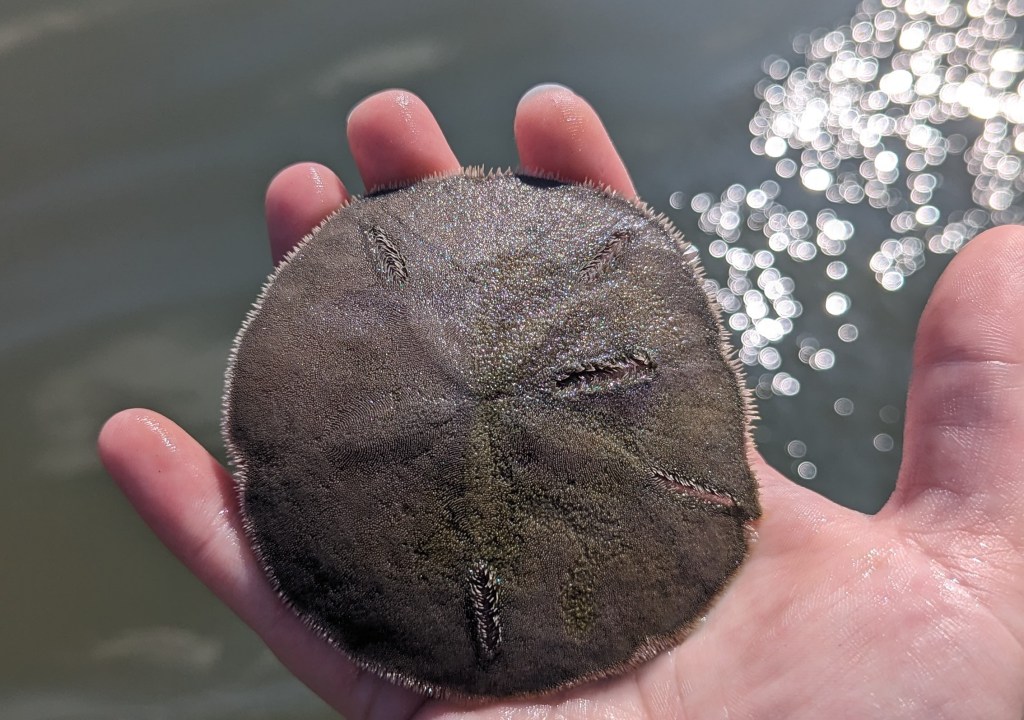
There are also tons of live sand dollars through the crashing waves of the beach. I’d never seen a live sand dollar, so I did have a spooked moment when I saw their “fur” moving. My mom and I had gone back to the beach chairs to warm ourselves back up. About 30 minutes later, my sister came running back to us yelling that we needed to leave right now. She was freaking out over something. As she was panicking and packing stuff, we asked her why she was acting like this. She stops, huffs, and says, “My hand is yellow. We have to go now!” Mom and I both roll our eyes and I google “hand yellow at the beach.” Leave it to Google to tell us that sand dollars excrete a yellow substance called echinochrome that is harmless. My sister was embarrassed but we got a fun story out of it.
Poe’s Tavern
One famous figure who was stationed at Fort Moultrie, located on Sullivan’s Island, was the poet Edgar Allen Poe. After spending the late morning and early afternoon at the beach, we worked up an appetite. Poe’s Tavern offered good food at a moderate price. They also have locations in Atlantic Beach, Wrightsville, and Savannah. Personally, the theme has more meaning at Sullivan’s Island since Poe was stationed there for military duty for roughly a year and a half. His stay on the island inspired his early literary works.
The tavern has some classic options from fish tacos, quesadillas, sandwiches, burgers, and chicken dishes. There is even a section for impossible burgers for those wanting a vegetarian option. On top of that, there are gluten-free options too. For those with fur friends, Poe’s Tavern allows dogs in the outdoor dining areas.

Fort Moultrie
By the time we had gotten back to our car and drove to Fort Moultrie, my mom and I had only 20 minutes to walk around. Unlike Fort Sumter, Fort Moultrie is on Sullivan’s Island, which is accessible by car. There is no ferry for this fort. The entrance fee is an easy $10 or simply use your interagency pass.
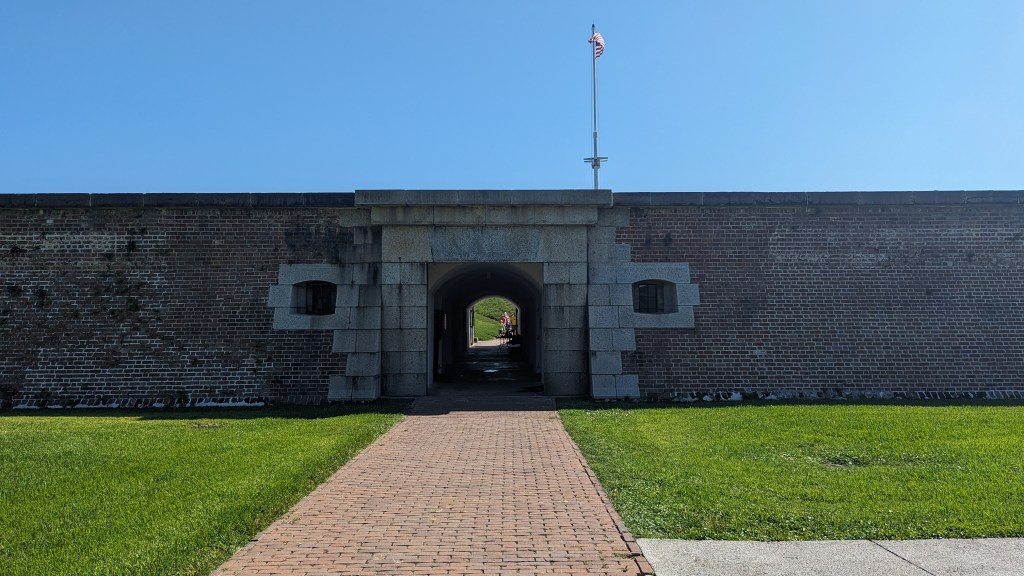
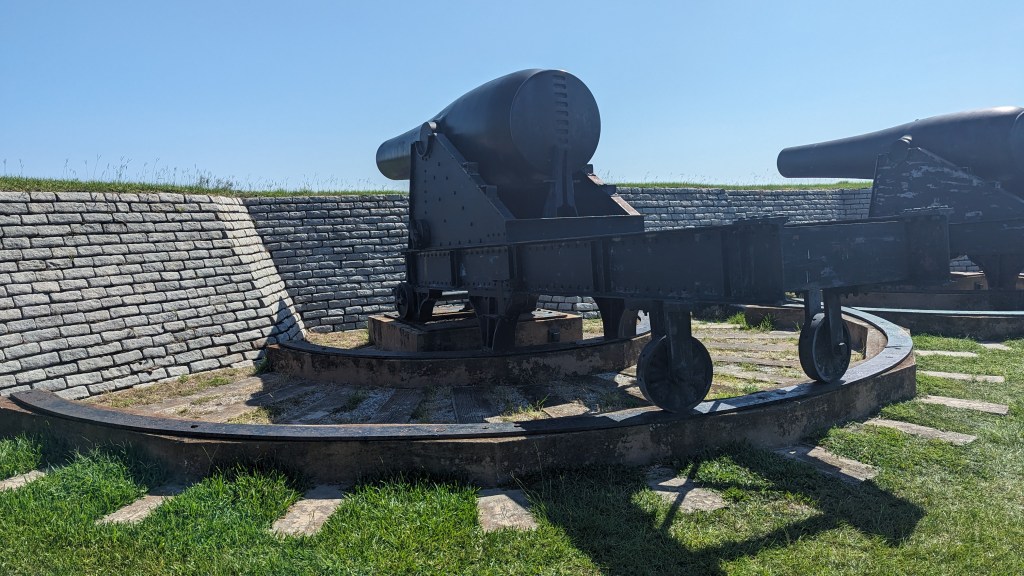
Fort Moultrie is one of the older forts in Charleston, if not the eastern coast. It was constructed using palmetto logs and surrounding beach sand. It wasn’t complete when the fort saw its first attack by the British Royal Navy in 1776. Fort Moultrie held out after 9 hours and the British were forced to retreat. Due to his leadership and ability to save Charleston from occupation, the fort was named after Colonel William Moultrie.

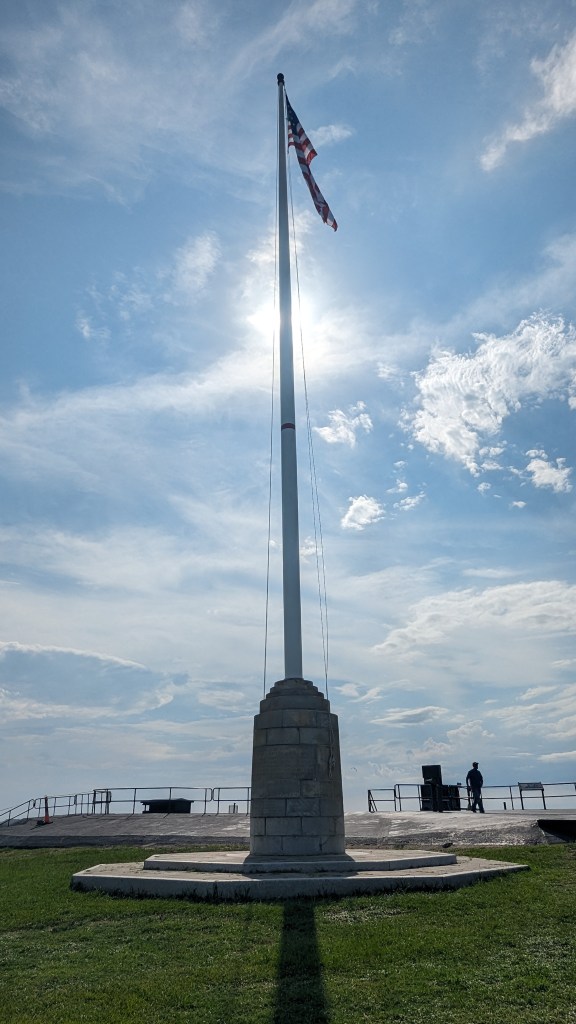
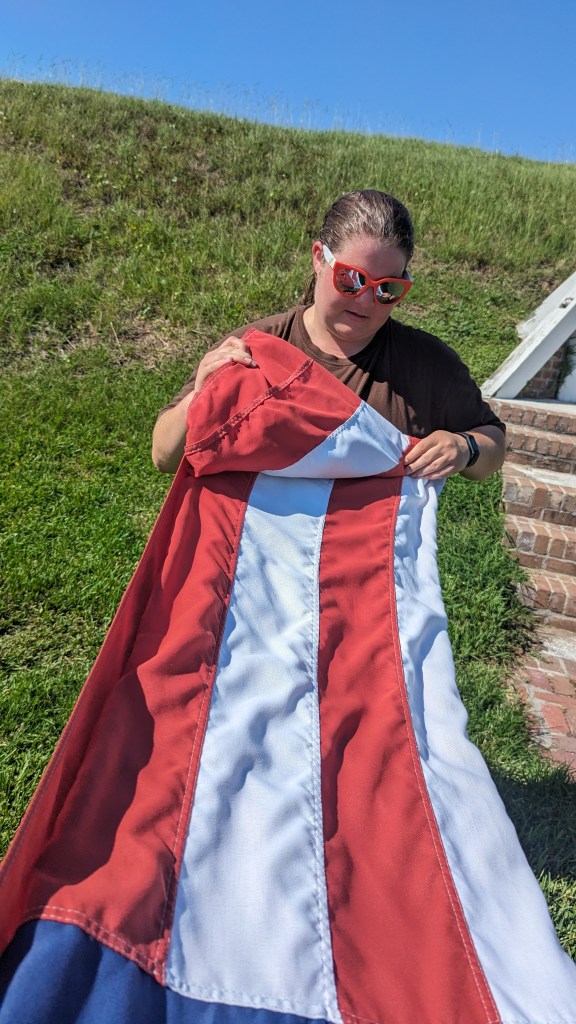
While I was able to walk around the grounds at my own pace, I made friends with the ranger at check-in as he saw us get all the cancellation stamps available. As we were leaving, the ranger was putting all his equipment away for the night. He then asked me if I wanted to help him bring down the flag. I said yes, of course. The flag that flies over Fort Moultrie is active. Since it is an active flag, the ranger and I saluted it before the ranger started lowering it. My job was to catch the flag as he brought it down. Then, my mom and I folded it for overnight storage. This flag is huge and I’m very short. The ranger told me that many people are taught that if a flag touches the ground, they have to burn it because it has been soiled. The ranger then saw my panicked face and reassured me that if it did accidentally touch the ground, it would not be burned as the dry ground couldn’t dirty it.

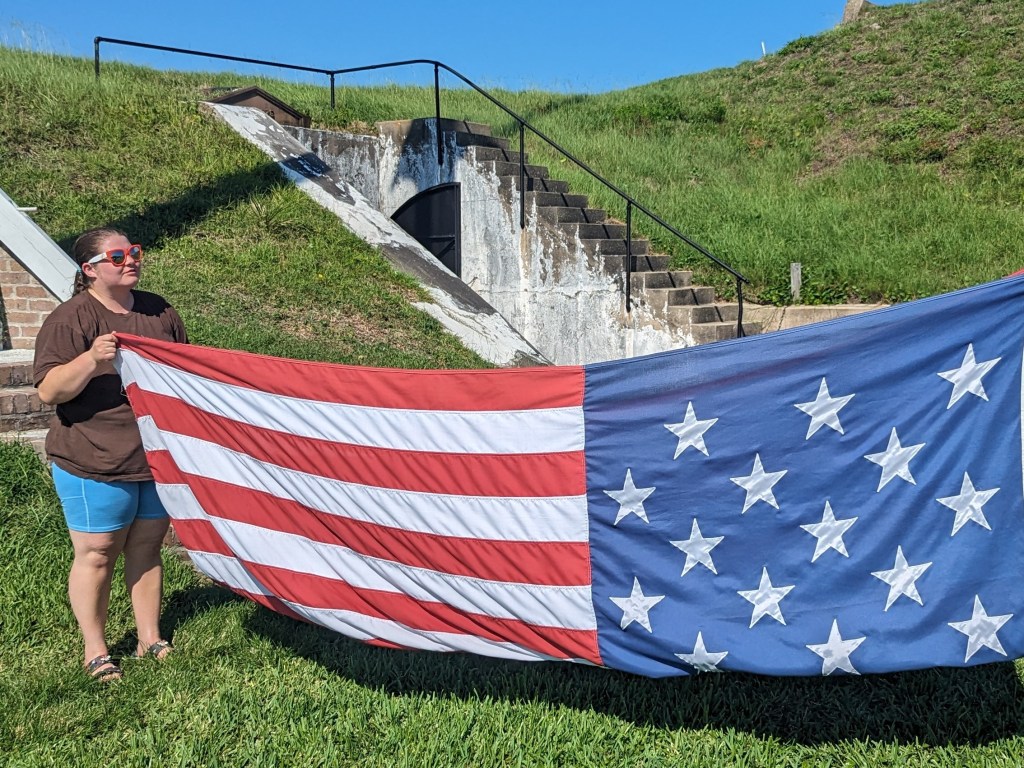
Now, keen eyes might notice the flag that flies over Fort Moultrie is a 15-stripe, 15-star flag. When the fort was officially opened in December of 1809, Vermont and Kentucky were just admitted into the Union as the 14th and 15th states in 1791 & 1792, respectively. At the time, the stripes and stars were equal to the number of states in the US. The 14th and 15th stars and stripes were finally added in 1795. For the next 20+ years, a 15-star, 15-stripe flag was the United States national flag. In 1818, 5 more states joined the Union. It was quickly realized that adding an equal number of stripes was going to be a hassle. It was decided that there would be 13 stripes for the 13 original colonies and the stars would equal the number of states. Because the 15-star, 15-stripe flag flew when the fort was opened, that is the flag that flies over it today.
Conclusion
Charleston is such a historic town for any topic and any era. While most people visit the heart of Charleston, which is great itself, I hope my post today shows the other options available to you if you are a military history buff or just looking for smaller crowds. Patriots Point immerses you in all eras of the US military from Fort Sumter to the USS Yorktown and the Vietnam interactive experience. Sullivan’s Island beaches are a great alternative to the crazy crowds at Folly Beach. Have you been to Charleston? What have you done? Comment below and keep life scenic!

Learn more about Scenic Byhorse here.
 Scenic Byhorse