Are you new to horseback trail riding? Wondering what to bring on your first trail ride? Maybe you’ve been on a few rides but want to start investing in some equipment. You’ve come to the right article! In this post, I’ll explain what the top 5 things to bring with you on a trail ride. What clothes to wear, water bottle preferences, media devices, communication, and even storage!
The links in this article may contain affiliate links. This means I might get a small commission if the link is clicked, or if the item is purchased through the link.
5. Clothing
- Jeans
- The western saddle has a huge piece of leather between your leg and the horse. You will be moving your legs around and if you aren’t wearing pants – at the very least – you are going to pinch, rub, and hurt your uncovered skin. A great pair of jeans can protect your legs from the saddle leather and even keep your skin from getting nicked by foliage or other things your horse might accidentally run into.
- Cowboy Boots or Other Sturdy Shoes
- Cowboy Boots are popular for a reason. Most notable is the heel. This stops your foot from slipping too far into the stirrup. If you are going to be working a lot with horses, you can even get cowboy boots with steel toes to protect your toes from a hoof accidentally stepping on your toe. When I was young, I had my foot stepped on while cleaning the hoof. It was not pretty, and it left a huge purple ring on my foot.
- Helmet or Cowboy Hat
- For safety, the best thing to bring with you is an ASTM/SEI-certified helmet. While the chance of falling off a horse is slim, it can still happen. For those who choose to protect their head and skull, there are equestrian riding helmets available – please make sure it is ASTM (formerly American Society of Testing and Materials) or SEI (Safety Equipment Institute). Bike helmets are not certified to be used for horseback riding! Bike helmets consider the height of a bike. The height of a fall from a horse is almost 3-4 times taller! If you want to use personal protective equipment, please use the correct gear.
- On the other side, if you choose to not wear a helmet, a hat should be worn for sun protection. Most trail rides last for 2 hours which is a long time to be in the sun. It is well known that a sunburn can develop in as little as 10 minutes! Think of how burnt you’ll be after 2 hours?! I’ll also use this section to shamelessly plug sunscreen for parts of your skin you can’t cover with clothing. My first ever cowboy hat was a $15 straw hat I got at a country music festival. I ended up getting it signed by Morgan Wallen, Frank Foster, Jon Pardi, Chris Lane, and Teddy Robb! So now it is a prized hat in my collection. However, once I moved to Colorado, I visited a shop called Kemo Sabe in Vail. My mom had seen it showcased in an episode of The Real Housewives. It was here where I got my next cowboy hat. The experience was very cool between picking a custom-made hat, shaping it, decorating it, and having it branded with decorative shapes that have meaning to me. If you are looking for a souvenir for your next trip to Vail or Aspen in Colorado or if you are poking around Jackson Hole/Grand Tetons, I highly recommend Kemo Sabe. It is an investment, but you will get an all-weather cowboy hat that will last you a long time!
Check It Out Yourself:
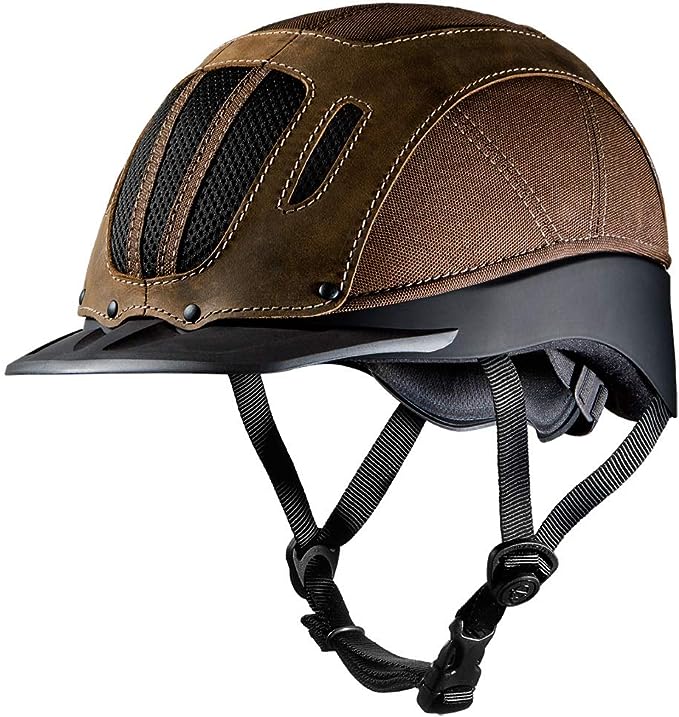

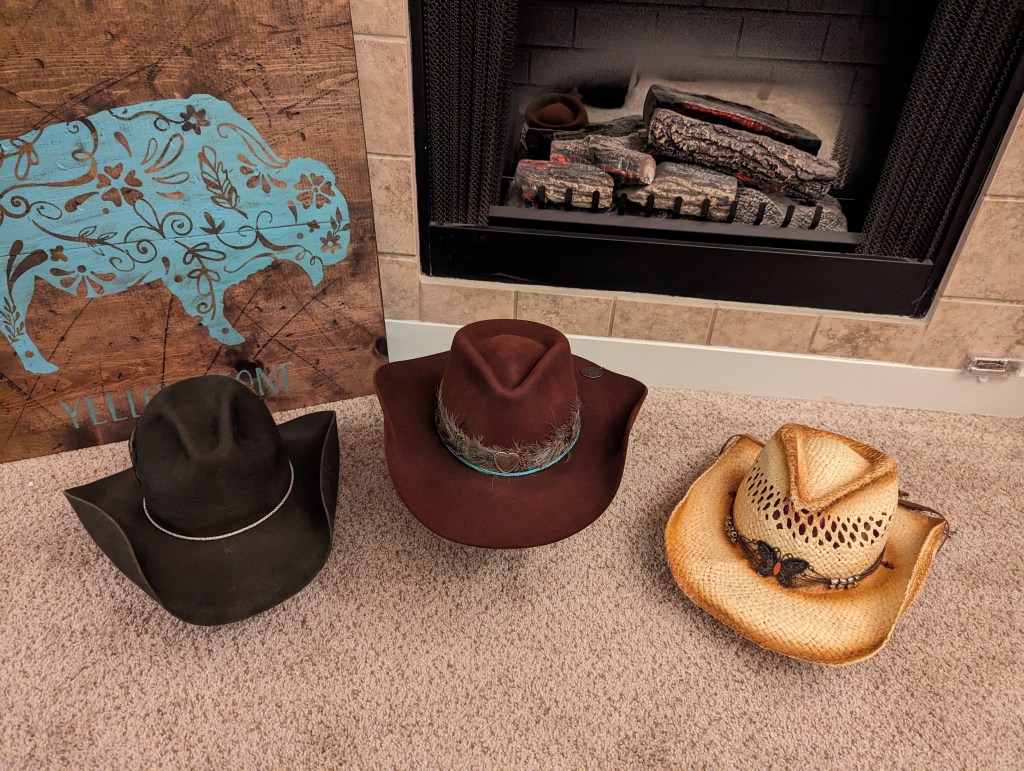
4. Water Bottle
While your horse does a majority of the work during a trail ride, the rider does exercise. Keeping a balance on the horse requires the use of your thigh, butt, and abdominal muscles. It can be great exercise. Trail riding often requires you to be in the sun which can cause you to sweat and dehydrate too. Keep yourself hydrated by bringing a water bottle. My favorite water bottle is the Hydro Flask 32oz water bottle. The bottle itself is light and fits in most water bottle-sized compartments. The water bottle doesn’t come with a flip straw, so I do recommend investing in this lid. With one hand on the horse’s reins, the flip straw lid will make it easy to take a quick sip of water and not have to juggle the lid and bottle and the reins.
Check It Out Yourself:
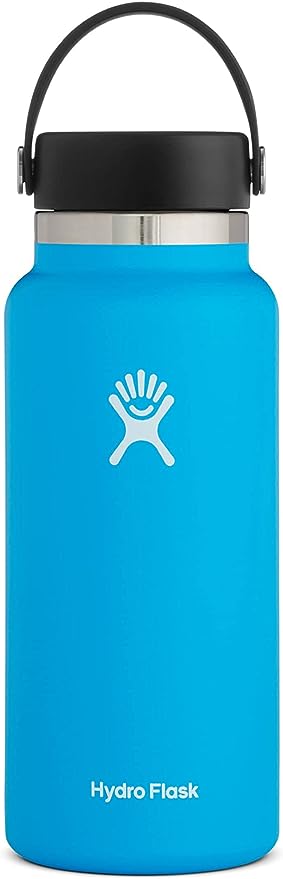
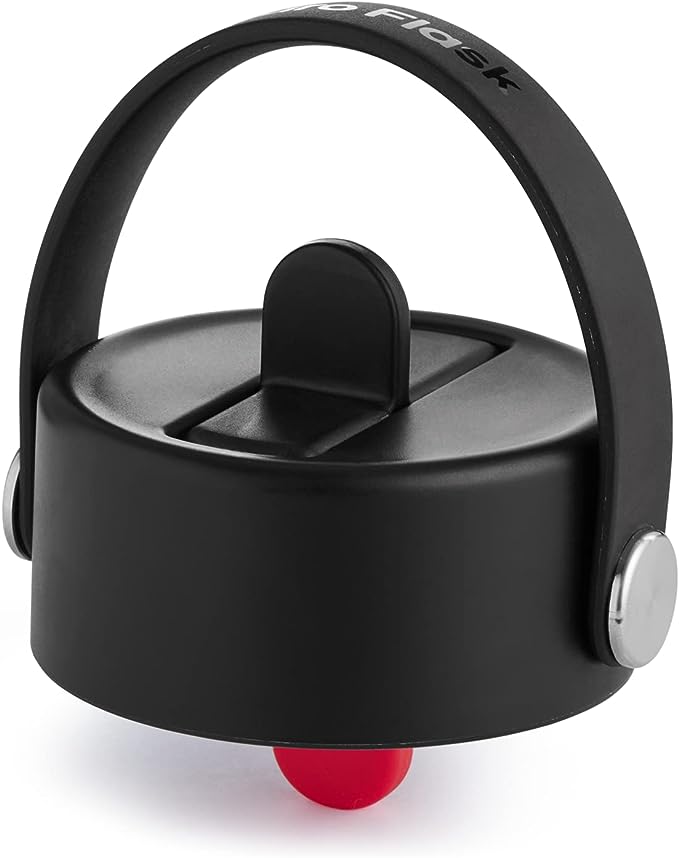

3. Camera or Other Media Capturing Device
- Phone
- Your phone is the easiest way to take pictures and record parts of the trail. Now, there can be debates about the differences between phone models, but 95% of the smartphones out there have great – if not comparable – camera specifications to professional cameras. I like to use a waterproof phone necklace because I already have it for paddle boarding. There are also other types of necklace phone holders out there that you can check out. This limits my chances of dropping my phone. Most places are tolerable if you drop your phone or some other item. However, there are stables out there that will not stop the trail ride if you drop something and might even make you hike out to the location to get it.
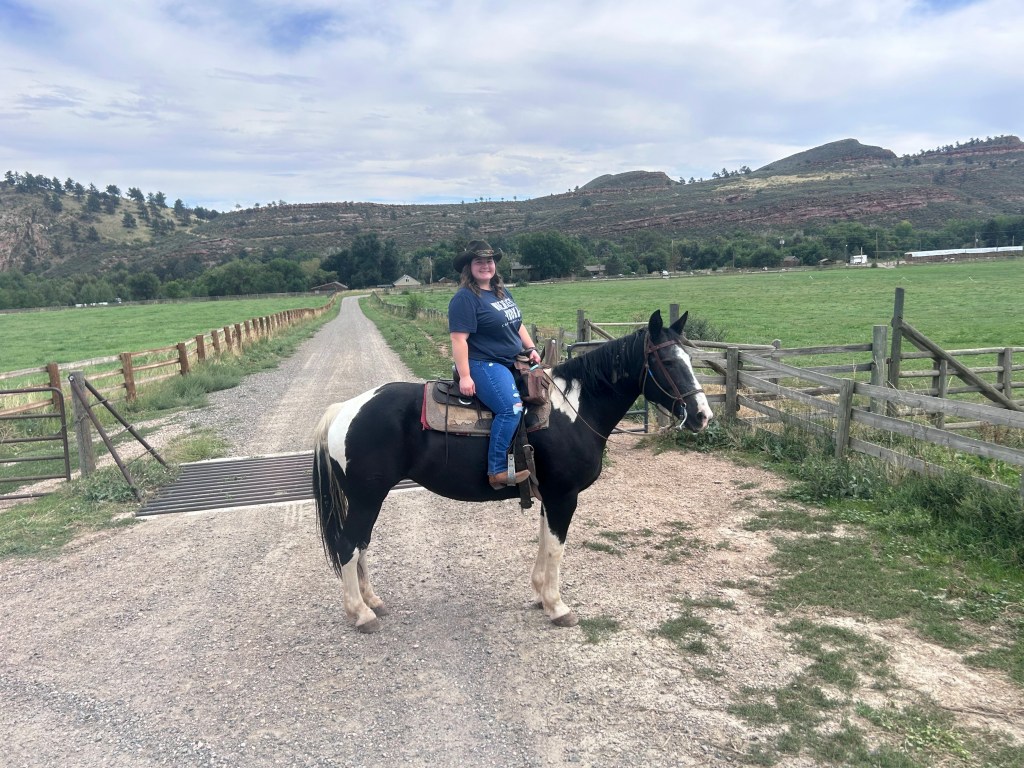
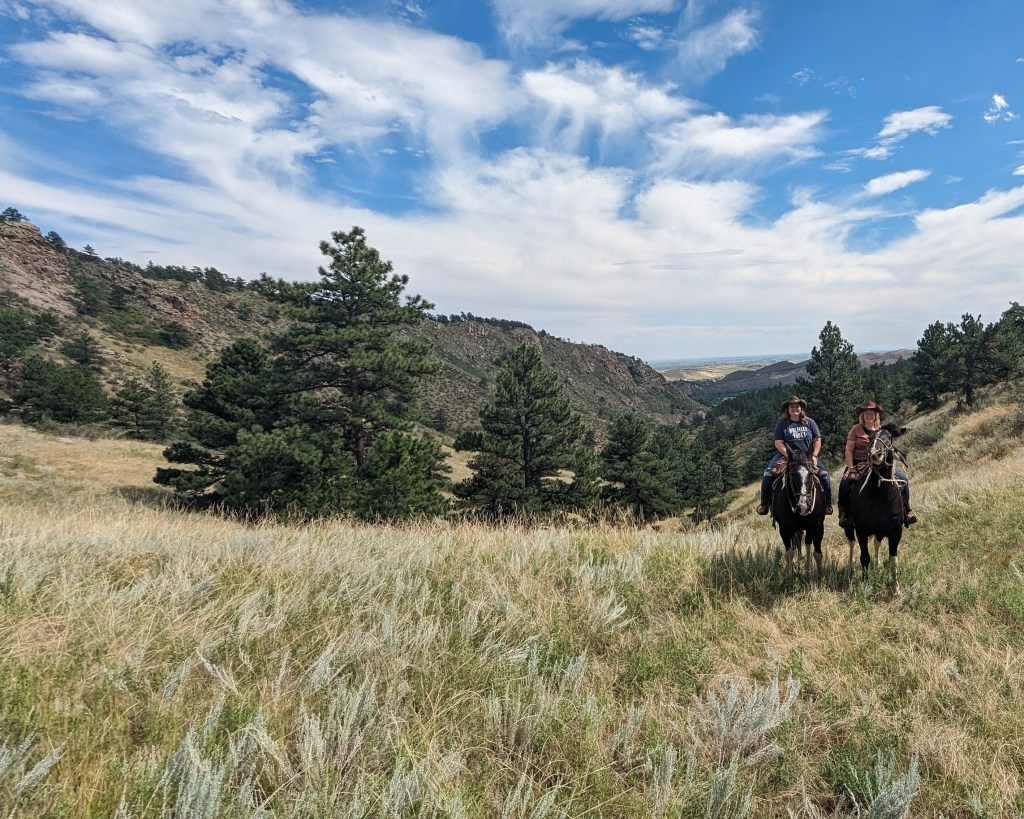
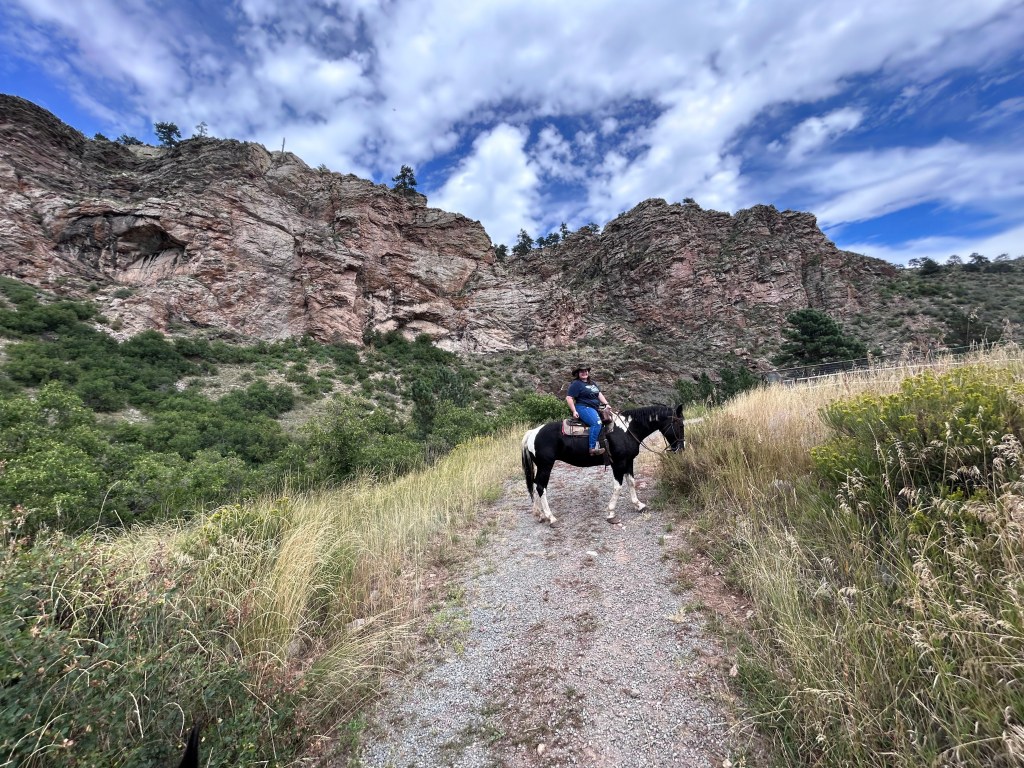
All these shots were taken from a Google Pixel and an iPhone.
- Camera
- The whole reason you are out there is to experience and enjoy the unknown parts of nature. Taking a professional camera with you guarantees quality pictures or video. Neck straps make it easy to keep your camera ready but allow your hands to be free to steer the horse. The downside is that these cameras can be heavy and cumbersome at times. But we all have the National Geographic photographer inside us who yearns for “the nature picture.” I don’t take a professional camera with me on trail rides, so I don’t have pictures to share for this bullet point.
- GoPro
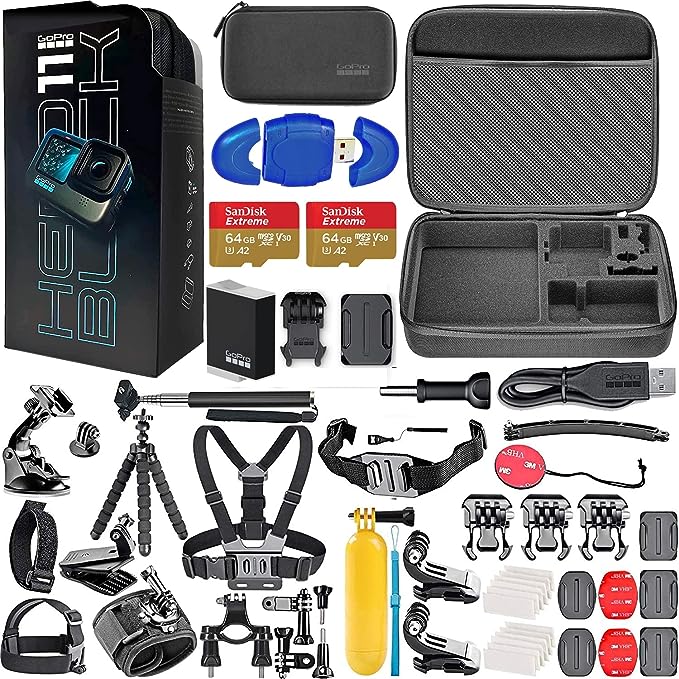
- For those who want video but want something a little less cumbersome but will still give you great quality, I recommend a GoPro. I personally use the GoPro Hero 11. The GoPro Hero 12 is coming out soon if you want to wait, but from what I understand, GoPro is at that point where each new model doesn’t have many changes. Waiting may not be necessary. I like to use the extended handle for trail riding, but I also use the chest mount for riding lessons. The helmet mount is popular too.

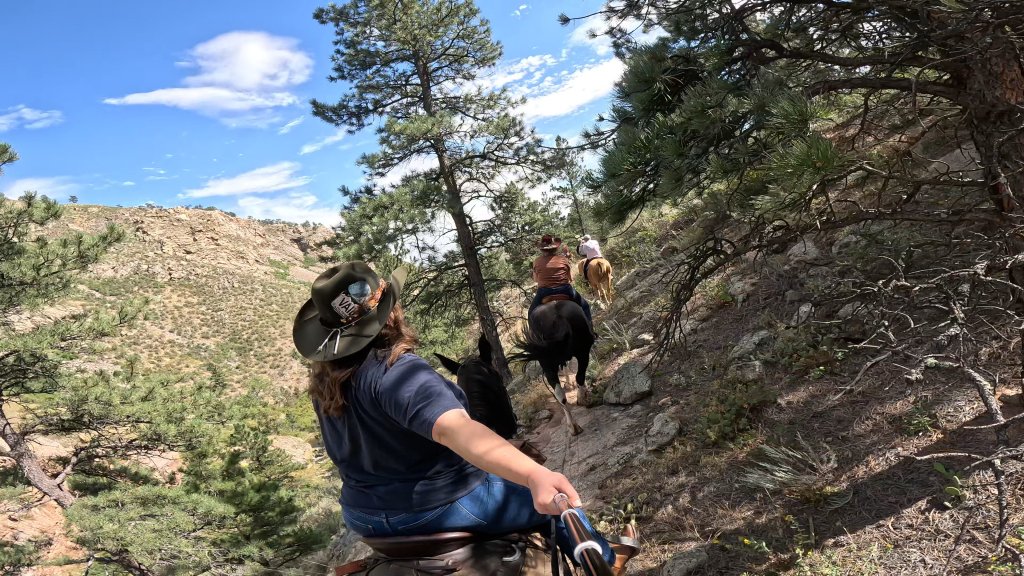
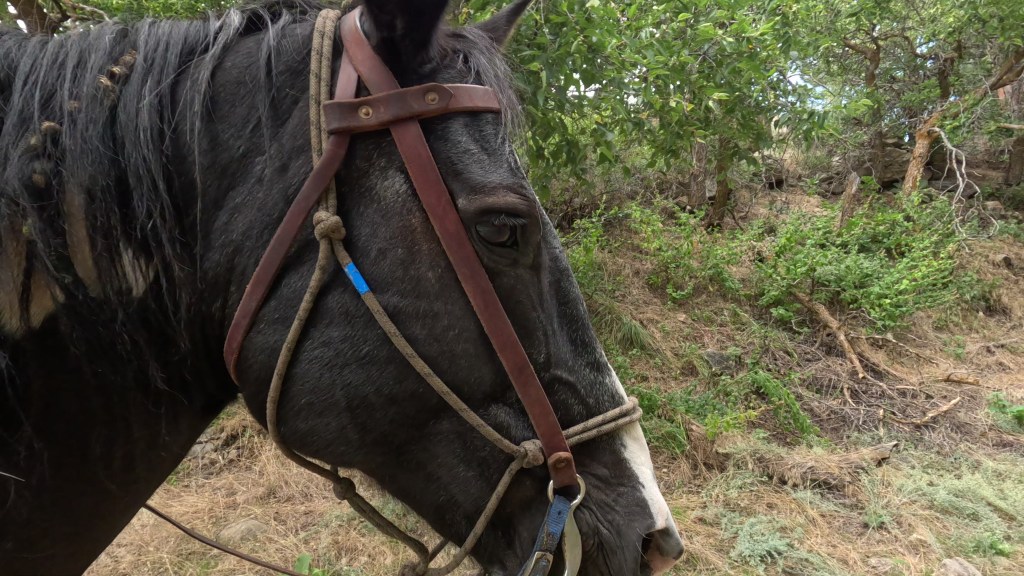
All these shots were taken from a video from a GoPro Hero 11.
Check It Out Yourself:


2. Satellite Messenger
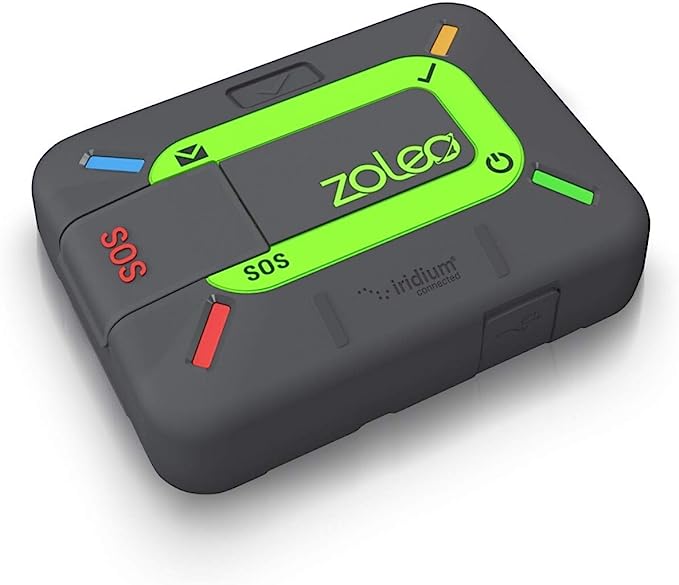
If there is one thing I can’t stress enough, it’s peace of mind that if an emergency occurs while horseback riding, you will be able to get help whether that is medical attention or rescue efforts. I live in Colorado and do trail rides all over the foothills and deep mountain ranges. There are a lot of places that cell service is sketchy or straight out doesn’t reach. Taking a satellite messenger with you can help ease your mind that if a freak accident happens, you can still get a hold of 911. The brand I use is Zoleo because it has the lowest initial investment and a reasonable monthly subscription. I can clip it to my belt loop on my jeans and have it on me while riding. If you are hesitant about if you’ll need a satellite messenger, see if the wrangler guide takes a radio with them. This often shows that the trail goes to remote places where the radio’s quick communication is a necessity.
Check It Out Yourself:
1. Saddle Bag
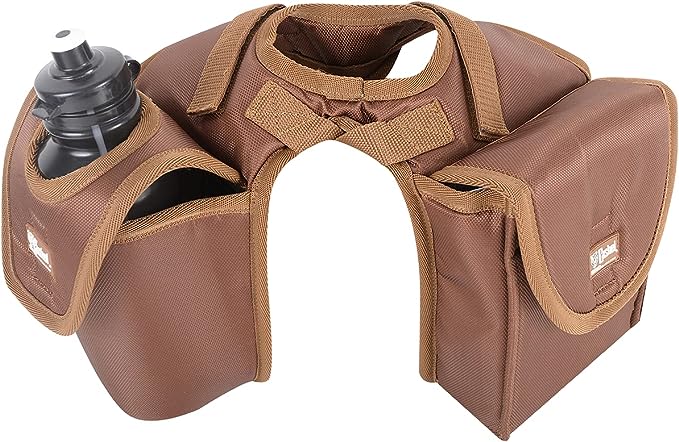
Okay, you have all these things for horseback trail riding. Now the question is, how do I take it with me on a trail ride? Don’t worry, I have the solution! Enter – the saddlebag. At least one pocket for each side of the saddle and it sits on the saddle through a hole on the horn. One side can hold your water bottle and the other can hold your GroPro/phone. Stables are starting to stock saddle bags for riders to use for the trail ride. However, it it worth getting your own so there is no gamble if the stable has one or not. I mentioned the chance of dropping things. It is due to this risk that virtually none of the stables out there allow backpacks. They don’t even want to deal with it.
Check It Out Yourself:


Learn more about Scenic Byhorse here.
 Scenic Byhorse