When you think of Wyoming and National Parks, you think of Yellowstone. The first ever national park and nowadays, a widely beloved TV show, it is quite the buzzword. But did you know that just south of Yellowstone is Grand Tetons? If you plan your trip right, you can explore both Yellowstone and Grand Tetons from early May to late October. While Yellowstone has famous geysers, the Grand Tetons is a great way to explore some epic mountains and check out Jackson Hole, WY.
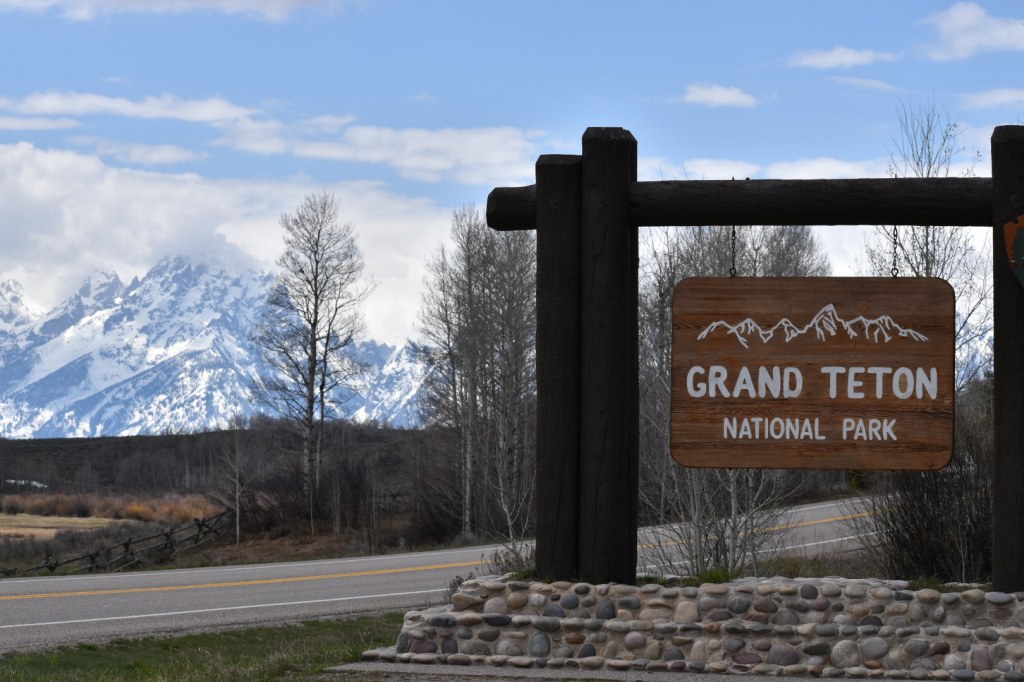
In my post, I’ll walk you through one day on my trip to the Grand Tetons back in May of 2023 with my sister and mother. After driving around, the park, we decided to drive to part of the park we had not explored yet. Next thing we know, we are on the side of the road – in our car – and Grizzly Bear 610 and her cubs are walking 60 yards out! From our car, we were able to get the most amazing pictures of her and her cubs! I’ll also go over what I was taught by a park ranger to do if you accidentally come across a bear while hiking. Ready? Here was my day at Grand Teton.
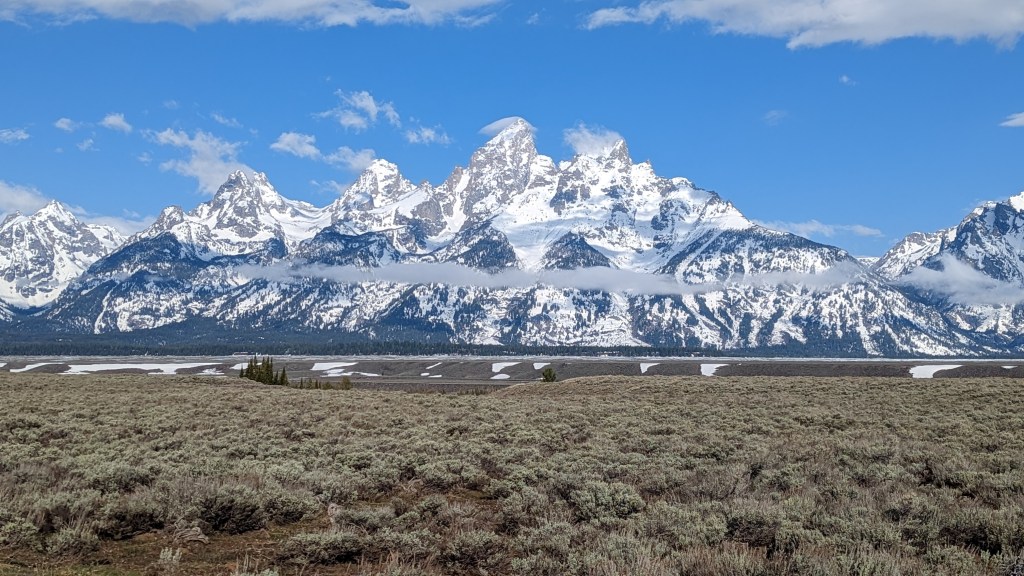
Grand Teton National Park
If the name of this park sounds like an innuendo, that’s because it kind of is. When French-Canadian trappers first found the territory in the early expeditions, the gorgeous geography and mountains took them by surprise. They came to three grand mountains, which they called “Trois Tetons” which translates to “Three Breasts.” Eventually, the original name was accepted quickly by trappers back then as the Tetons quickly became a landmark for guiding through the region. While the region was given many names – the native peoples called it the “Three Brothers,” Americans called it the “Pilot Knobs,” and the Hudson’s Bay Company called it the “Three Paps.” However, cartographers officially recognized the “Three Tetons” and the landmark first appeared on a map in 1837.

The Rockies are known for huge amounts of snow and planning the right time to visit can be tricky. In April 2022, I planned a Yellowstone trip. Unfortunately, I didn’t realize they closed off certain parts of the park based on the month of the year in Spring. The National Park Service of Yellowstone is comfortable committing to getting roads snow plowed by certain dates. After my trip last year, and my trip this year, I would recommend mid to late May. Even in April, it was still snowing which made it hard to enjoy the scenery – if it wasn’t pure white – and see wildlife along the road or near the road. May is when all the roads, including the road between Grand Tetons and Yellowstone, are open. It gives you the most versatility to drive around and live life on the impromptu lane. It also puts you in a great spot to be right in the middle of the newborn season. Moose and elk cows give birth between May and June, and while mama bears give birth during hibernation, waking up and being hungry makes for active bears foraging for food especially when spring still has snow-covered grounds.
Morning – Grizzly Bear 610 and Her Cubs
The day started out well. Beautiful bright blue skies forced the snowcapped Tetons to pop as we drove north along HW-191. I was extremely tired as I’d spent the night before at Jackson Hole’s famous Million Dollar Cowboy Bar. We drove up to Oxbow Bend where we’d seen a Mama Grizzly and her cubs in a large field in the far distance the day before. No dice. Looking at the map, we decided to drive over to Jenny Lake. We hadn’t been to that part of the park yet. As we approached the road near Leigh Lake, we saw a huge traffic jam as cars were scrambling to pull off to the side of the road. Clearly, there was an animal but what animal could cause this much traffic backup? Then, walking along the ridge, were four furry brown creatures. My mouth dropped as I realized what they were. Grizzly bears!
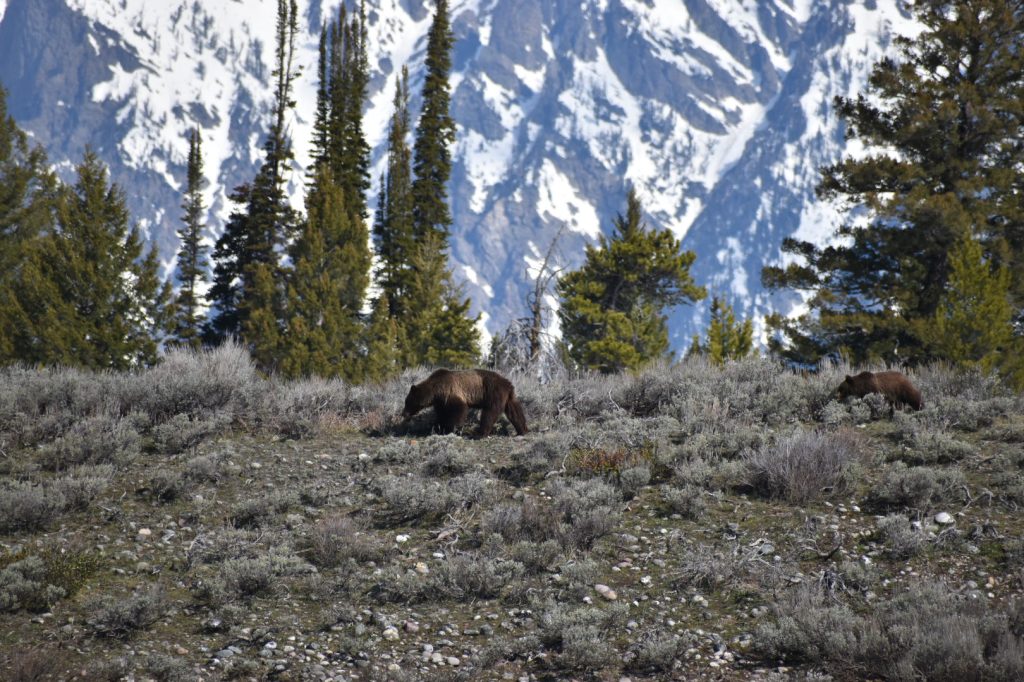
Seeing that they were walking in the direction we were driving, we took a chance to park further down the road hoping they would eventually make their way towards our direction. Sure enough, after 10 minutes of waiting, 610 and her cubs finally made it just 60 yards from our car. It was surreal! I have lived in Colorado for 3 years now. I have been enjoying camping in Rocky Mountain National Park for 3 years now. I have been warned and lectured on the possibility of a black bear getting into food and your car overnight for 3 years now. I have yet to see a bear in RMNP – although this summer I did witness one swimming in Grand Lake – enjoy that cliffhanger. Follow the blog if you want to read that post when it is published. My point is that RMNP has over 265,807 acres of territory and there are only an estimated 20-30 black bears in or around the park. In contrast, Grand Teton has a huge 310,000-acre range but a rough population of a staggering 700 grizzly bears and 550 black bears! You are more likely to see a bear, but it is still not as common.
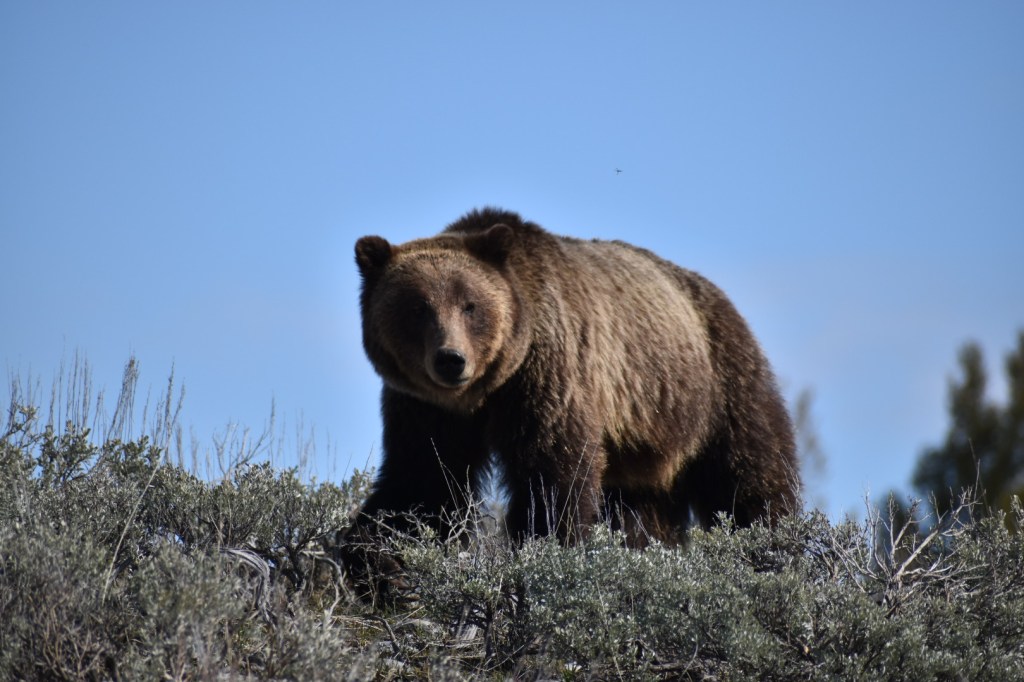

To finally see a bear in real life was amazing. I dare say that I don’t think I could ever have an experience like this ever again! Grizzly Bear 610 is the daughter of the even more famous 399. Since she and her cubs just got out of hibernation only a week before our visit, 610 was focused on foraging for food. The cubs were hungry too, but definitely liked to have a little fun with each other. At one point, a cub lay on their back and almost looked like it was trying to make a snow angel.
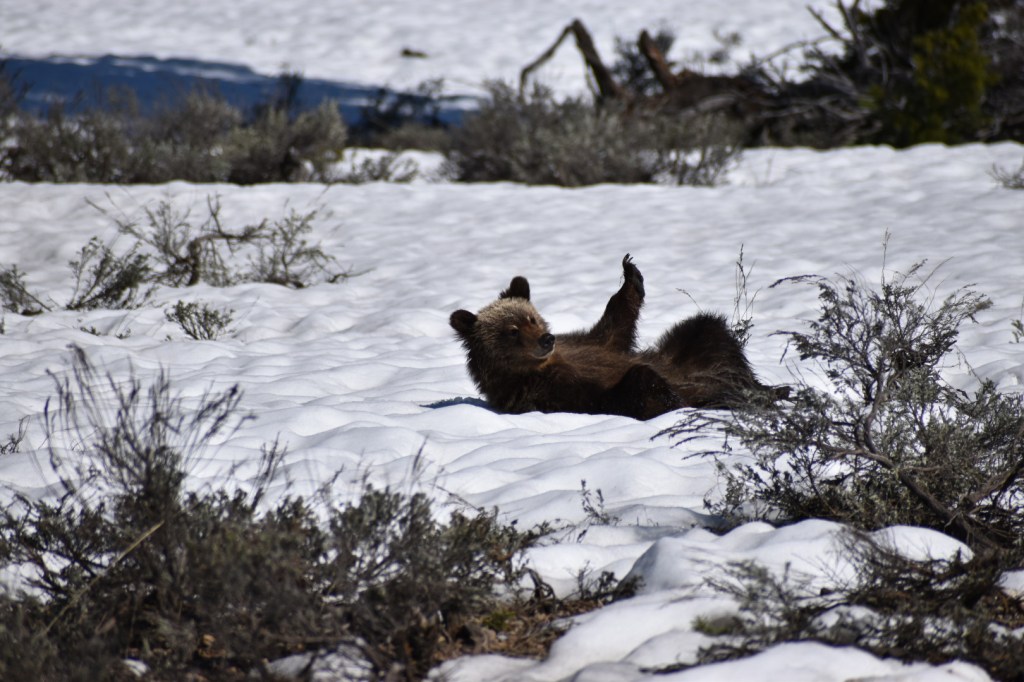
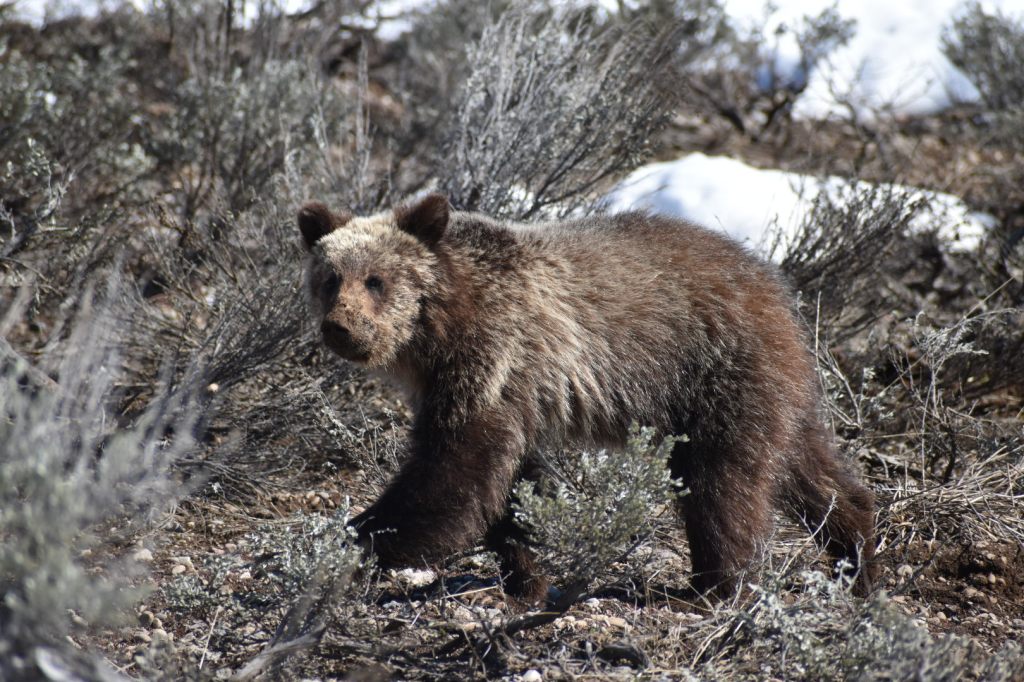
Again, we were in the safety of our car the whole time, but 610 decided to cross the road in front of the car in front of us. This led to the cutest reaction from cubs as they were not sure if they could cross the road too. Two finally crossed the road but left one who started pacing as they got worried about separation. Finally, the cub just went for it and caught up with the group. Bear 610 has a reputation for charging park visitors and being safe around bears is never something to take lightly.
Bear Safety
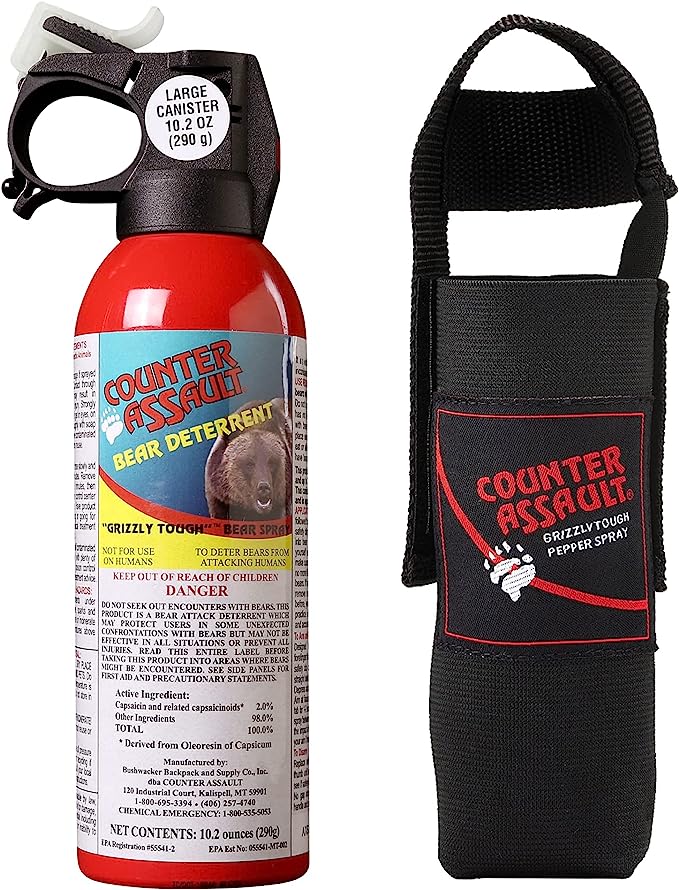
What should you do to keep yourself safe in Bear Country? Later that day, we stopped by the visitor center to purchase bear spray. It was here that we talked to a ranger and got hands-on experience with an empty can of bear spray. Hiking in Bear Country is risky. While you are less likely to have a bear encounter staying near roads and official trails, the park does make clear that your safety is not guaranteed. Bear spray should be on hand – one can per adult. This is because a bear will charge one person and you will not have time to hand off the bear spray to whoever gets charged.
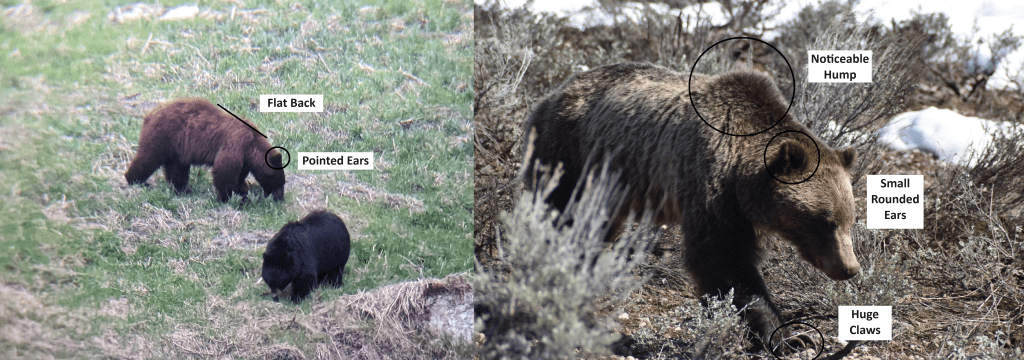
In the Grand Teton National Park, there are two species of bear: grizzly bear and black bear. Both have their own physical characteristics and levels of aggression. Black bears are just larger than a Great Dane or other large dogs but have much more muscle for better strength. Not to mention up to 2” claws on their feet. Their track has toe marks around the pad of the foot and the claws are closer to the toes. Black bears, whilst being known for their jet-black color, can range from blonde to black and even brown. The profile of a black bear has no visible shoulder hump and larger pointed ears. They are known the be more skittish and scared off easily, but can still attack when feeling threatened.
Grizzly bears, however, are much larger than black bears. They are easily recognizable by their shoulder hump, which is a huge bump that looks similar to a camel hump. They can also range from blonde to black but are most commonly brown. Grizzlies are also known for their shorter and rounded ears. Getting to the feet, grizzlies have huge 2-4” claw lengths. Perfect for digging and foraging. Their track has the toes lining up straighter and claw marks are spaced bigger considering the larger claw length. Grizzly bears are more aggressive.
You are more likely to see mama bears and her clubs near the road which is even more dangerous if she feels her cubs are in danger. Enter the dark side of nature. Mama bears have learned that male bears stay away from roads so the female may feel that it is “safer” to keep her cubs near the roadways. Why might she think a male bear is the most dangerous thing for her cubs? Because they are. Male bears are known to attack and kill cubs just to breed with the female bear as she will stop lactating once the cubs are gone. A female bear, once she has birthed, will start lactating and therefore, not breed until she has fully raised her cubs. This is why black bears have famously been pictured with their cubs in trees and the mother bear fighting to the death to protect her cubs against a male bear.
Regardless of which bear you may accidentally encounter; it is important to know how to interact and respond should the interaction go sideways. First and foremost, be aware of your surroundings. This is always a great rule of thumb but especially in thick wooded areas, bears can appear out of nowhere. Second, anytime you approach a blind spot – this could be around a corner, a bushy area, etc – make noise. This could be as simple as “Hey Bear!” (which is what the ranger I spoke to uses). If you do encounter a bear, again, make noise. Let them know you are there. A spooked bear is more dangerous than a curious bear. DO NOT RUN! The ranger could not stress this enough. Bears are predators. If they see something run near them, they will chase it. You will not outrun a bear. Bears hit up to 20 mph while humans can only hit about 7 mph. Stand your ground and immediately grab your bear spray. Remember, while most bear sprays have roughly the same spray distance and spray time, it can vary depending on the manufacturer. Check the label for specific details.
Once the bear knows you are there, one of three things will occur. Either the bear will A) see you and ignore you by continuing what it is doing (common), B) it will see you and run away as it does not want to interact, or C) it will see you and either be curious or feel threatened (rare).
Scenario A) Common – Once the bear goes back to what it is doing, slowly and cautiously walk back the way you came facing the bear so you are still able to see where it is. Do not use bear spray but still have it ready.
Scenario B) If the bear runs away, still slowly and cautiously walk back the way you came. While there is no immediate threat, you now have no idea where the bear is. This means you have no idea where the bear could come from if it decides to return and feels threatened. Do not use bear spray, but still have it ready.
Scenario C) Rare – If the bear decides to charge, stand your ground and at 30 yds (max spray distance) engage the bear spray for 2-3 seconds aiming low as the bear’s nose is likely to be low to the ground and doing very small sweeping motions to ensure you create a cloud in front of the bear. If a canister has 8 seconds of spray, doing 2-3 seconds of spray gives you at least 3 chances to hit the bear. This ensures that if you miss the first spray, you can try again, and if all else fails, you’ve got one last spray has the bear is almost at your immediate bubble. Bear spray is pepper spray times 100! It will get the bear if properly used, but be careful not to spray it at any other than a bear. DO NOT SPRAY ON TENTS, PEOPLE, OR OTHER OBJECTS. Only aim at a bear. Depending on the bear, read carefully. Unfortunately, in the event the spray is not properly used and the grizzly bear, specifically a mother bear, makes contact with you, the park recommends falling to your stomach, covering the back of your neck with your hands, and “playing dead.” If it is a black bear or predatory attack (usually from behind), do not play dead. Fight back and aim for the bear’s muzzle using any object you can find. Please utilize the park’s resources for up-to-date and in-depth research.
Full National Park Service Resources and Information:
Mountains and Moose
The rest of the day was fun too. We continued to drive around the park and made our way to Moose-Wilson Junction. It was in this area where we saw two different moose sightings. The first was down the Moose-Wilson Road. It was hard to see as the moose was behind some bare bushes, but I still got some cool pictures. There was road construction, but we were still able to make it to the Laurance S. Rockefeller Preserve which is a nice peaceful area to hike.
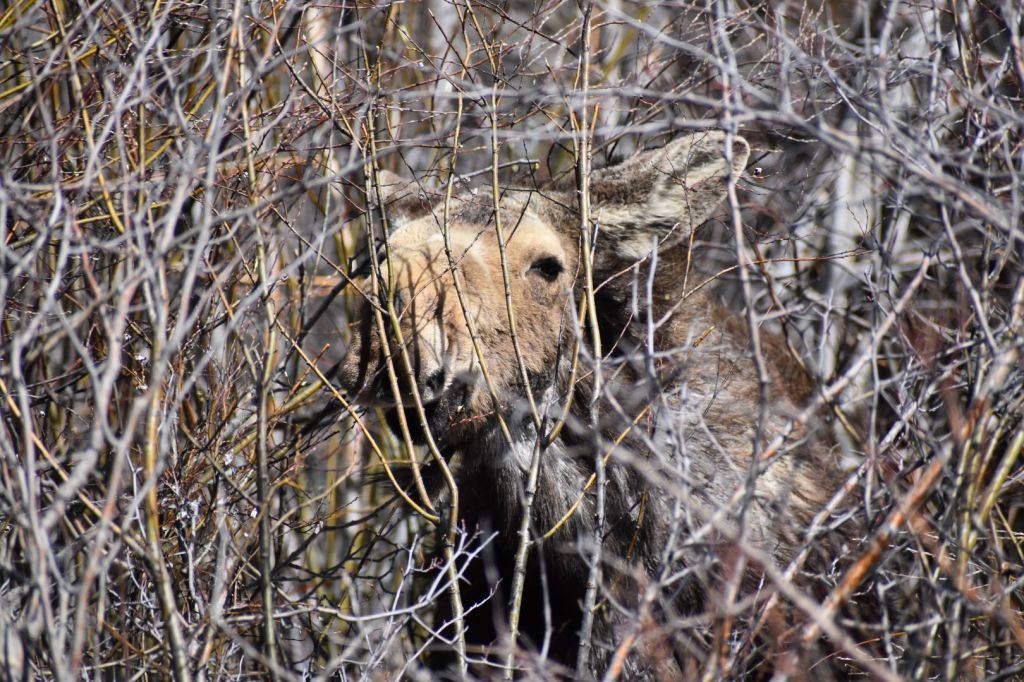
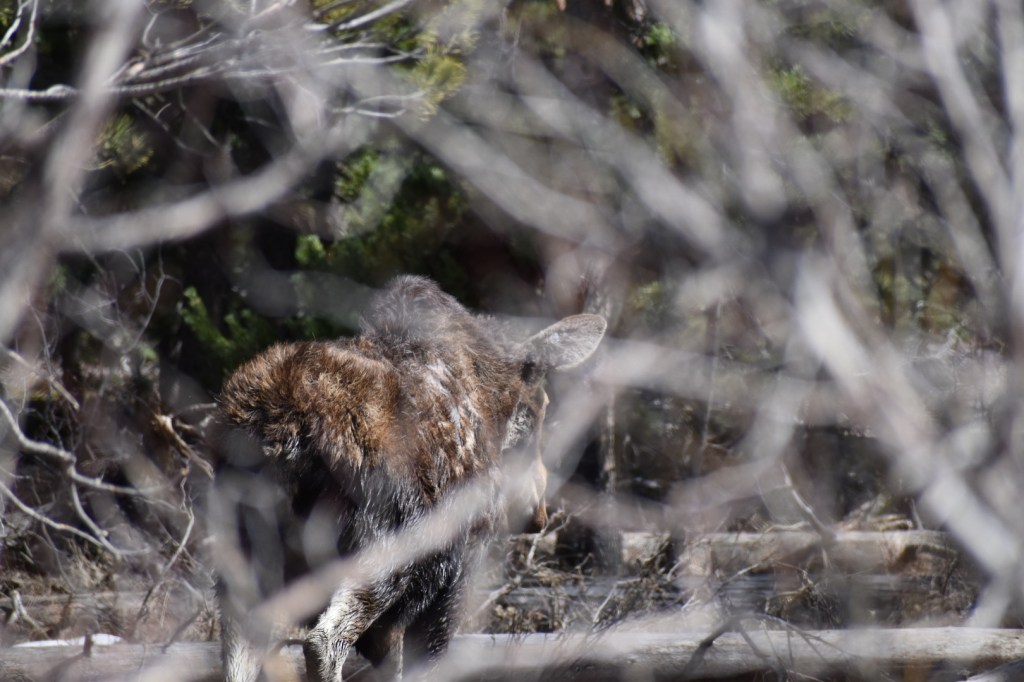
Overall, the day was filled with wonderful views, wildlife, and spring’s slow arrival. If you are going to be visiting Yellowstone, I highly recommend adding Grand Teton National Park to your itinerary. Even if for a day, you’ll be able to get a nice change of pace from the forest-covered Yellowstone and have a grandiose mountain view for lasting memories.
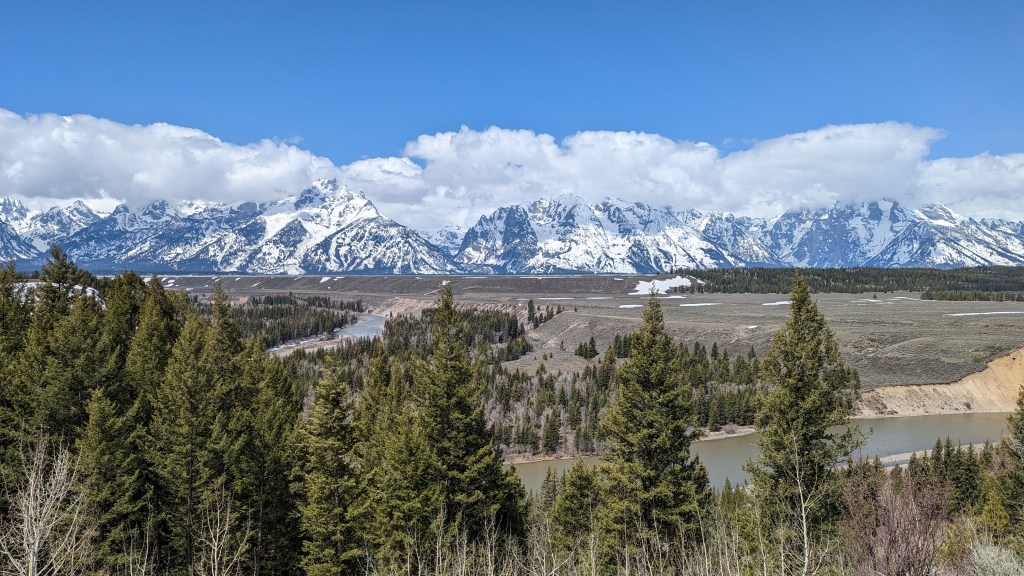
Have you been to Grand Teton National Park? What wildlife have been lucky enough to find? Comment below and have a great day!

Learn more about Scenic Byhorse here.
 Scenic Byhorse