Commercial trail riding can seem intimidating at first. Adults might feel general nervousness but for young adults or teenagers, the oversized comparison between themselves and the horse can be a lot to overcome. Horses are the catch-all for cowboys and spanning out to ancient peoples for centuries and for good reason. They have incredible muscles that are estimated to let them carry 20% of their weight in a very efficient way. Horses paved the way for cultures to travel, communicate, and grow food that revolutionized history. But these giants really can be gentle. So why is it that people get nervous about riding a horse? Falling! Horses are tall powerful animals and can hurt you under certain circumstances. In this post, I want to help new trail riders or those just starting to ride horses feel more comfortable and confident by providing tips and tricks I’ve learned over my years of going on trail rides. When that next adventure calls, you’ll be able to book that trail ride with confidence and excitement!
Worst-Case Scenario
First and foremost, a horse is an animal. While training helps keep a horse’s actions predictable, unexpected events can occur. The horse gets spooked by wildlife or even something as simple as you trying to shift your weight to avoid that branch can cause you to fall off your horse. It is with this worse-case scenario in mind that I would recommend new trail riders wear a helmet will riding a horse. This will protect your head from the fall and any objects in the fall vicinity (trees, rocks, etc). Knowing and accepting that you can fall off the horse is one step towards gaining confidence. Knowing that the helmet is going to help protect you should the worst-case scenario happen is going to help rest your nerves. You’ll be able to call attention to steering the horse and enjoying the scenery.
With the acceptance of the possibility of falling off a horse, here are some things to help prevent it:
- Pay attention to your surroundings. Like driving a car, you might see something that distracts you from focusing on the road ahead. By doing this, you are risking the occurrence of an accident. Same goes with steering a horse. If you are aware of your surroundings and wildlife pops out of nowhere in the distance, you know it is there and you can stay calm. Your horse will feel you saying calm and is more likely to stay calm itself.
- Let the wrangler know you are a beginner. When it comes to trail riding, you are assigned a horse based on experience, weight, and group size. Wranglers work with the horse all day, every day and know which horse is best suited for beginners or teens. Wranglers appreciate honesty because when they can assign you the correct horse, it means an easier trail ride for you and them!
- Horses feed off your energy. I’m sure we’ve all heard the term “aura.” Instead of heading over to the local psychic next time you want your aura read, hop on a horse, and go trail riding. Joking aside, horses do feed on your emotional presence. I can tell who isn’t comfortable on a horse because that horse gets spooked the most and the rider doesn’t have the cool and collected manner to keep the horse calm. Think of a puppy. If you start jumping around and acting crazy, the puppy will mimic you. However, if you stay calm and cool, maybe not right away, but after a little bit, the puppy will follow suit and lay down or move on to something else.
- Show the horse you have control. Once you have set the tone with your aura, set the tone with your actions. Trail horses go through many riders and know that they can test each rider to see what the rider will let them get away with. Ninety percent of the time, this is done through the horse trying to eat grass. I can’t tell you how many rides I’ve been on a ride where the rider just lets the horse eat grass whether there is a horse bathroom break holding the line up or the trail is going through tall grass. Once the horse thinks you have no control, go luck getting it to do anything you really need it to. Whether that is steering it into a picture pose to trying to avoid that tree trunk hitting your foot. It is game over. Showing you have control is as simple as keeping reasonably loose reins but using them when needed to stop grazing and to tell the horse to move to a direction, so you don’t get clotheslined by the tree branch.
- Get your stirrups fitted correctly. This is very important for many reasons. First, you will be sitting in a position you have not sat in before and be sitting in said position for a long time. Getting the correct stirrup length can help ease your body weight off your butt and straddle area for decreased soreness afterwards. Secondly, improper stirrup length can put you in a bad position on the horse and cause weight to be put on the wrong part of the horse. This will cause long-term damage to the horse. The typical rule of thumb for stirrups is that the bottom of the stirrup should be at your ankles. You will have your heel in position to squeeze the horse to tell it to walk and it will be easier on your muscles.
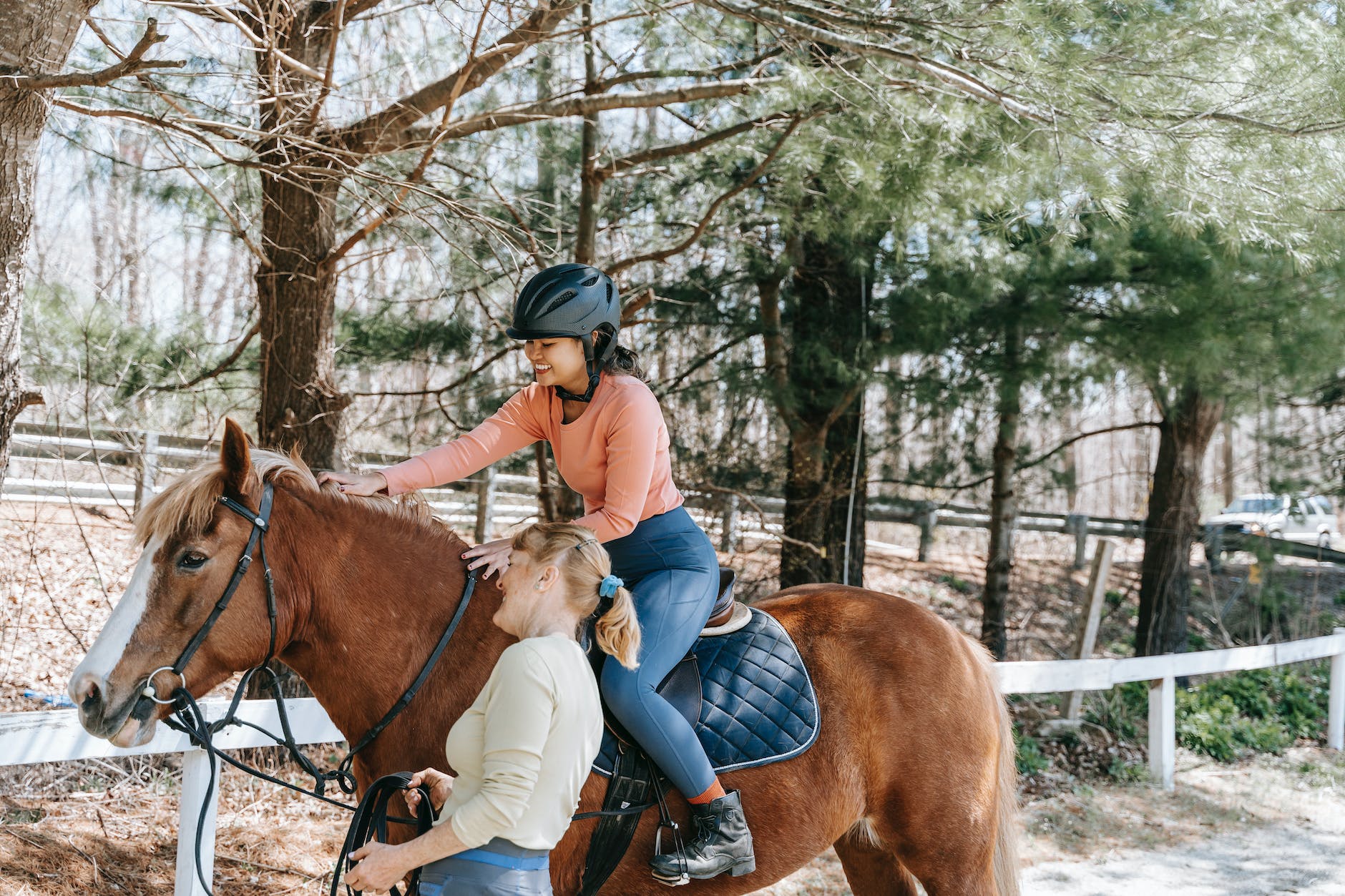
Safest Way to Fall Off a Horse
What should you do if you are going to fall off a horse? Whatever the circumstances that cause you to fall, knowing how to properly fall off a horse can help keep you safe and give you the best chance of minimal injury.
- Recognize the horse’s state of mind. Is it a quick moment of surprise or is the horse in full-blown panic mode? If the horse is just surprised, stay calm and reassure the horse everything is okay. Remember, they feed off your emotions. If the horse is in a full-on panic and calming it down is not an option, proceed to the next steps.
- Kick off your stirrups and let go of the reins. The last thing you want to happen is for your feet to be caught in the stirrups and to be dragged alongside the horse as its flight mode kicks in.
- Touch your chin to your collarbone and cover your head and neck. On top of wearing a helmet, use your hands to cover your head and neck. Tuck yourself into a ball as you fall. Don’t let your arms freely move around. You’re going to increase your risk of injury. Try to land on a spot that could take the blow of the fall with the least amount of injury.
- Fall and once you’ve hit the ground, move away from the horse. Either commit to a log roll using the fall’s momentum or quickly crawl away. If you are familiar with bull riding from rodeos, we all get that sick stomach feeling every time the rider falls off the bull. Especially when they fall near the bull’s feet. Between kicking and the risk of the animal’s weight being put on you, the feet area is the danger zone! Get away ASAP!
- Assess yourself for injuries. Don’t immediately run after the horse. Check yourself for injuries such as cuts, bruises, lumps, etc. Under serious injuries, forget the horse and seek medical attention stat. Recover the horse later once you are safe.
Essentially, as many guides have told me, think let go, curl up, and get away.
Rest Assured
At this point, you be thinking, “How is this supposed to give me confidence to ride a horse?” Remember, this is a worst-case scenario. I’ve been doing trail rides my whole life. Ninety-five percent of the rides I’ve done have never had a horse go out of control. And while a few had some near misses, the riders were able to calm the horse down and avoid resorting to falling off the horse.
The biggest blessing is that trail horses used for commercial trail riding have huge benefits! First, they walk their trails day after day. For example, Colorado’s commercial trail riding season is typically from late April to early September. That means, the horse has been taking the same trail day in and day out for 6 months. Talk about clocking in and out of work! This means the horse not only knows where to go, but it knows what possible wildlife is out there. Similarly sized wildlife like deer or elk are no big surprise to the horses.
The second benefit is that the horses are thoroughly trained for trail riding. Horses are not used for customers until the wranglers are comfortable doing so. How do they know if a horse is ready? By riding the horses themselves of course! This also helps the wrangler generally assign horses to riders knowing how the horses have done on a trail ride through firsthand experience.
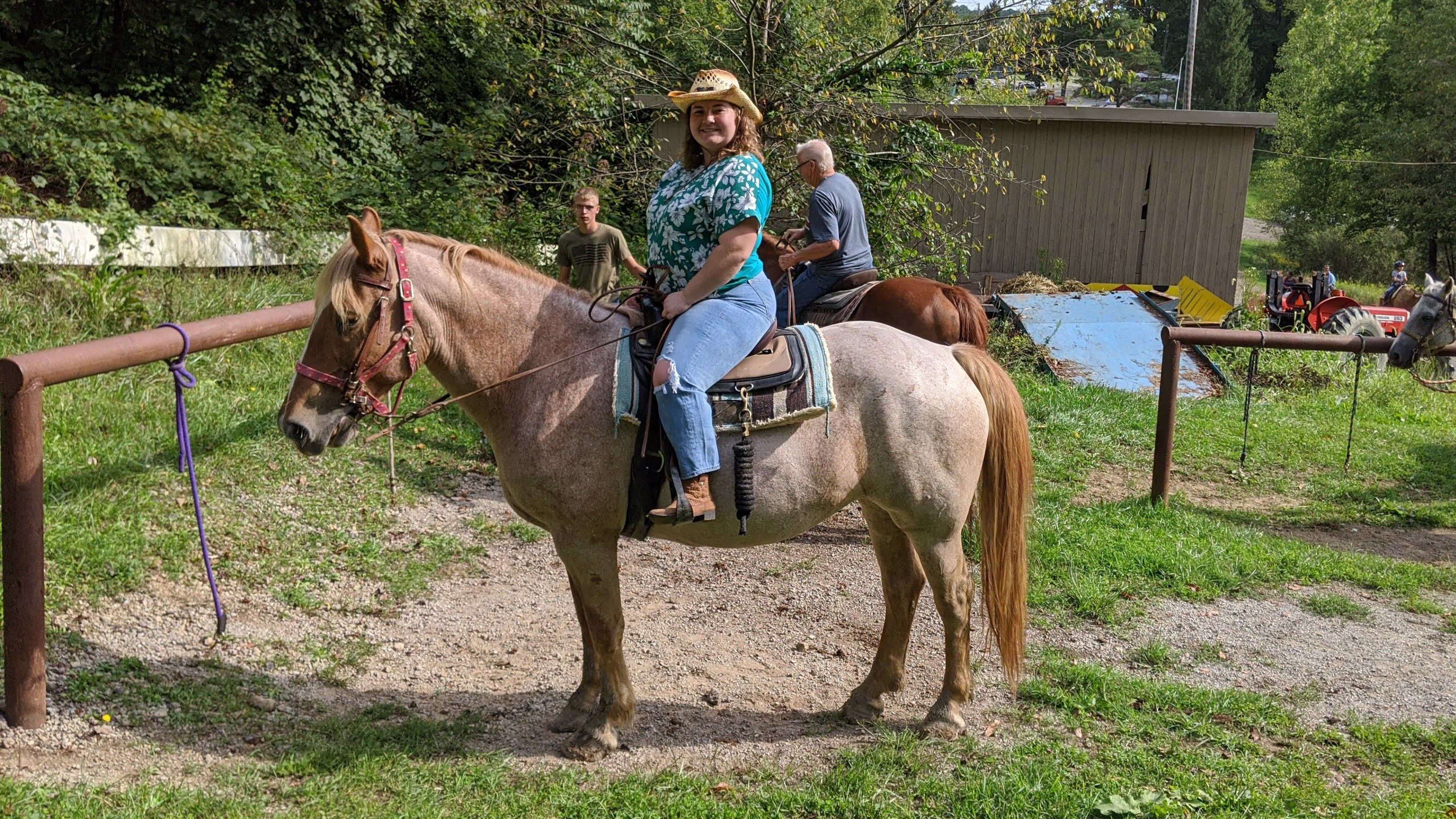
Giddy Up on That Horse With a Smile
Yes. Falling off a horse is a real possibility, but it should not stop you from trail riding. Trail riding gives you an opportunity to explore thick forests, rolling hills, grandiose landscapes, and more! It can scratch that adventure itch or show you an adventurer in you that you didn’t know existed! Falling is a legitimate way people get injured but knowing that it could happen and having some tools to help minimize or even prevent it are the best to prepare yourself. Next time you sit down in a saddle, smile. You got this!

Learn more about Scenic Byhorse here.

